
Sauna Health Benefits – What the Science Actually Says
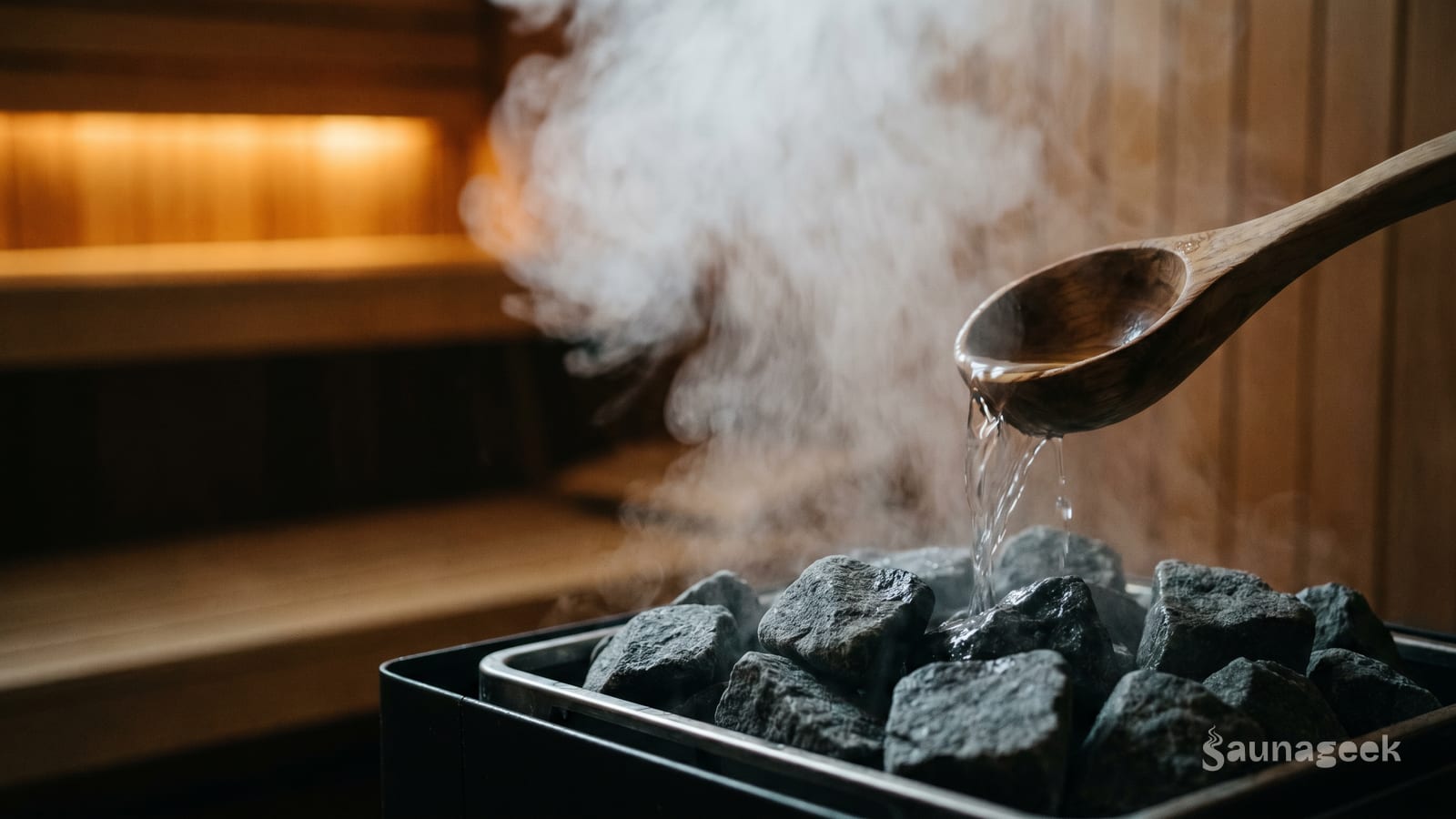
Sauna health benefits are real, and the physiological mechanism is straightforward: heat opens you up. Blood vessels dilate, your heart rate climbs, and you start sweating within minutes. That simple response triggers a chain of effects throughout your body. Some are well-documented, some promising, some still uncertain. Here’s what sauna use actually does for you, and where the evidence has gaps.
What Happens to Your Body in a Sauna
Step into a sauna and your body responds immediately. Core skin temperature rises. Your heart pumps faster, sometimes hitting 120-140 beats per minute, similar to moderate exercise. Blood vessels near the skin expand (vasodilation), lowering blood pressure even as your heart works harder. You sweat, losing half a liter to over a liter of fluid in a typical session.
These changes are the engine behind almost every claimed benefit. The heat is the mechanism. Everything else is downstream.
| Effect | Typical Change |
|---|---|
| Heart rate | +50-70% above resting |
| Skin temperature | Up to 40-45 °C (104-113 °F) |
| Sweating | 0.5-1.5 kg fluid loss per session |
| Blood pressure | Slight initial rise, then lowered overall |
This is not passive relaxation. A sauna session is a genuine cardiovascular challenge, which is exactly why the health effects are real.
Cardiovascular Health - the Strongest Evidence
If you take one thing away from this article: cardiovascular benefits have the best evidence behind them.
A 2018 Mayo Clinic review of published research found that regular sauna use is associated with lower blood pressure, improved vascular function, and reduced risk of cardiovascular disease. The strongest data comes from Finnish cohort studies by Laukkanen and colleagues, following thousands of sauna users over decades. Frequent users (four or more sessions per week) showed roughly 40-60% lower risk of developing cardiovascular disease compared to those who used a sauna once a week or less.
The mechanism isn’t fully understood. Heat stress appears to improve endothelial function (the lining of your blood vessels), reduce inflammation, and help regulate blood pressure through repeated dilation and contraction cycles. Think of it as exercise for your blood vessels.
Blood pressure tends to drop after a sauna session, and some studies suggest this effect persists with regular use. If you have hypertension, that’s worth discussing with your doctor; sauna isn’t a replacement for medication, but the evidence suggests it complements other interventions.
Stress, Sleep, and Mental Recovery
Step into a hot sauna after a hard day and something shifts. Cortisol levels drop. Anxiety eases. You sleep better that night. The evidence here is moderate but consistent.
The Finnish concept of sauna as mental recovery isn’t just tradition. Heat exposure modulates the autonomic nervous system, shifting it toward parasympathetic (“rest and digest”) dominance. Several studies show reductions in anxiety scores after regular sauna use. The effect is probably cumulative, and people who sauna multiple times per week report better overall stress management.
Sleep improvement is well-documented. Falling asleep faster, sleeping deeper, waking less during the night. The timing matters: using the sauna two to three hours before bed mimics the natural temperature drop your body wants at night, and that seems to prime sleep readiness.
What competitors don’t mention: the ritual itself is part of the benefit. The löyly (the throw of water on sauna stones), the quiet between rounds, the gradual transition from hot to cool and back. These create a meditative cycle. Cultural context meets physiology.
Pain Relief and Muscle Recovery
Heat therapy for pain is old medicine. Saunas deliver it in a controlled, repeatable way.
Evidence is moderate to good for chronic pain conditions: rheumatoid arthritis, osteoarthritis, fibromyalgia, and lower back pain all show improvement with regular heat exposure. The mechanism is straightforward. Heat increases blood flow to muscles and joints, reduces spasm, and lowers sensitivity to pain signals.
Infrared saunas may have an edge here. Traditional saunas heat the air; infrared heats objects directly, including your body. Infrared wavelengths penetrate tissue more deeply at lower air temperatures, which means you get more heat to sore muscles without as much thermal load on your skin. The evidence isn’t conclusive, but it’s biologically plausible and worth considering if pain relief is your goal.
Emerging science points to BDNF (brain-derived neurotrophic factor), a protein that supports neuron health and function. A few studies suggest heat exposure may increase BDNF levels. If that holds up in larger trials, sauna use could have cognitive benefits too. Flag this as promising, not proven.
For muscle recovery after exercise, the evidence is mixed. Sauna may reduce soreness and help you maintain training volume, but it’s not a shortcut. Sweating out fluid and then rehydrating incorrectly can leave you worse off.
Skin and Respiratory Benefits
Wet sauna, the kind where you throw water on stones, adds humidity that acts as a natural inhalation therapy. People with asthma and COPD report subjective improvement. The warm, moist air hydrates respiratory tracts and may help clear mucus.
The evidence level here is preliminary. Research samples are small and confounding factors are hard to control. Don’t rely on sauna as a respiratory treatment, but know that it’s not harmful for most respiratory conditions and many people find it genuinely helpful.
Psoriasis and other dry skin conditions sometimes improve with regular sauna use. The sweating and subsequent shower cycle appears to help. Again: preliminary evidence, but plausible mechanism, and widely reported anecdotally.
Don’t overstate this section. Respiratory and skin benefits are the weakest part of the evidence base.
Sauna Types and Which Benefits Each One
Competitors treat “sauna” as one thing. It isn’t.
Traditional dry sauna (Finnish) heats air to 70-100 °C (158-212 °F) with humidity typically under 20%. This is the most studied type. Most cardiovascular and mental health evidence comes from this format.
Infrared sauna operates at lower air temperatures (45-60 °C / 113-140 °F) but uses radiant heat that penetrates tissue directly. Benefits may be similar to traditional sauna for pain and recovery, but evidence is thinner because infrared is newer and fewer long-term studies exist.
Steam room is not a sauna. Temperature is usually 40-50 °C with 100% humidity. The humidity makes it feel hotter than it is. Respiratory benefits are more plausible here due to the steam. Cardiovascular evidence is much weaker; steam rooms haven’t been studied as extensively.
For heart health and stress reduction: traditional dry sauna has the evidence.
For pain and muscle recovery: infrared is a reasonable choice, especially if you can’t tolerate high air temperatures.
For respiratory issues and skin hydration: wet sauna or steam room.
You don’t need to choose one exclusively. Many enthusiasts rotate between types.
Who Should Skip the Sauna
Sauna is not for everyone. Some conditions make it genuinely dangerous.
Do not use a sauna if you:
- Have uncontrolled heart disease or recent cardiac event
- Experience orthostatic hypotension (blood pressure drops sharply when you stand)
- Are pregnant, especially in the first trimester
- Have consumed alcohol recently. This dramatically raises risk of heat injury
- Have certain arrhythmias or are wearing a pacemaker (check with your doctor)
Low blood pressure deserves special mention: the vasodilation from heat can compound the problem. If you already run low, cool down carefully and avoid long sessions.
Anyone with a chronic condition should talk to their doctor first. Sauna isn’t inherently dangerous, but the cardiovascular stress is real.
Alcohol and sauna is a genuinely bad combination. Every year people end up in emergency rooms because they thought “a few beers in the sauna” was fine. It isn’t. Alcohol impairs your body’s ability to regulate temperature and reduces awareness of overheating. Skip it.
How to Use a Sauna for Maximum Benefit
Start low. Five to ten minutes is enough for your first session. Work up to 15-20 minutes. Nobody wins a prize for lasting longer.
Hydrate before, during, and after. You will lose fluid. Replacing it matters. Water or electrolyte drinks work. Avoid alcohol before and after until you know how you respond.
Cool down between rounds. The Finnish löyly cycle (heat, cool off, rest, repeat) is not just ritual. It gives your cardiovascular system time to recover and your core temperature time to stabilize. Two to four cycles per session is standard.
Frequency matters more than session length. The Finnish standard of three to four sessions per week shows up repeatedly in the best studies. One 45-minute session on Sunday is not the same as three 20-minute sessions spread across the week.
Watch your body, not the clock. Dizziness, nausea, and tunnel vision are signals to get out immediately. Heat exhaustion is real.
Skip the gimmicks. Sauna hats, extreme infrared cure-all claims, and “detox” protocols are marketing, not medicine. A towel, water, and the willingness to sit quietly for 20 minutes is all you need.
The Bottom Line
Sauna use has real, measurable health benefits, and the cardiovascular evidence is solid enough that you can act on it without waiting for more research.
Regular use (multiple times per week, 15-20 minute sessions) lowers blood pressure, reduces CVD risk, improves sleep, and helps with chronic pain. These are not spa marketing claims. They come from cohort studies, clinical reviews, and physiological research.
Other claimed benefits, respiratory improvement, skin health, muscle recovery, are plausible and worth pursuing, but the evidence is weaker. Treat them as welcome extras, not reasons to buy a sauna.
Infrared vs traditional? Both work. Traditional has more evidence. Infrared may be better for pain specifically. Pick what you have access to and use it consistently.
Skip the gimmicks. Stay hydrated. Don’t drink alcohol. Talk to your doctor if you have any cardiac or circulatory conditions.
That honest, evidence-first framing is the difference between this article and the generic listicles from health authorities. Sauna is good for you. How you use it matters.