
Sauna Cold – Contrast Therapy, Benefits, and How to Do It Right
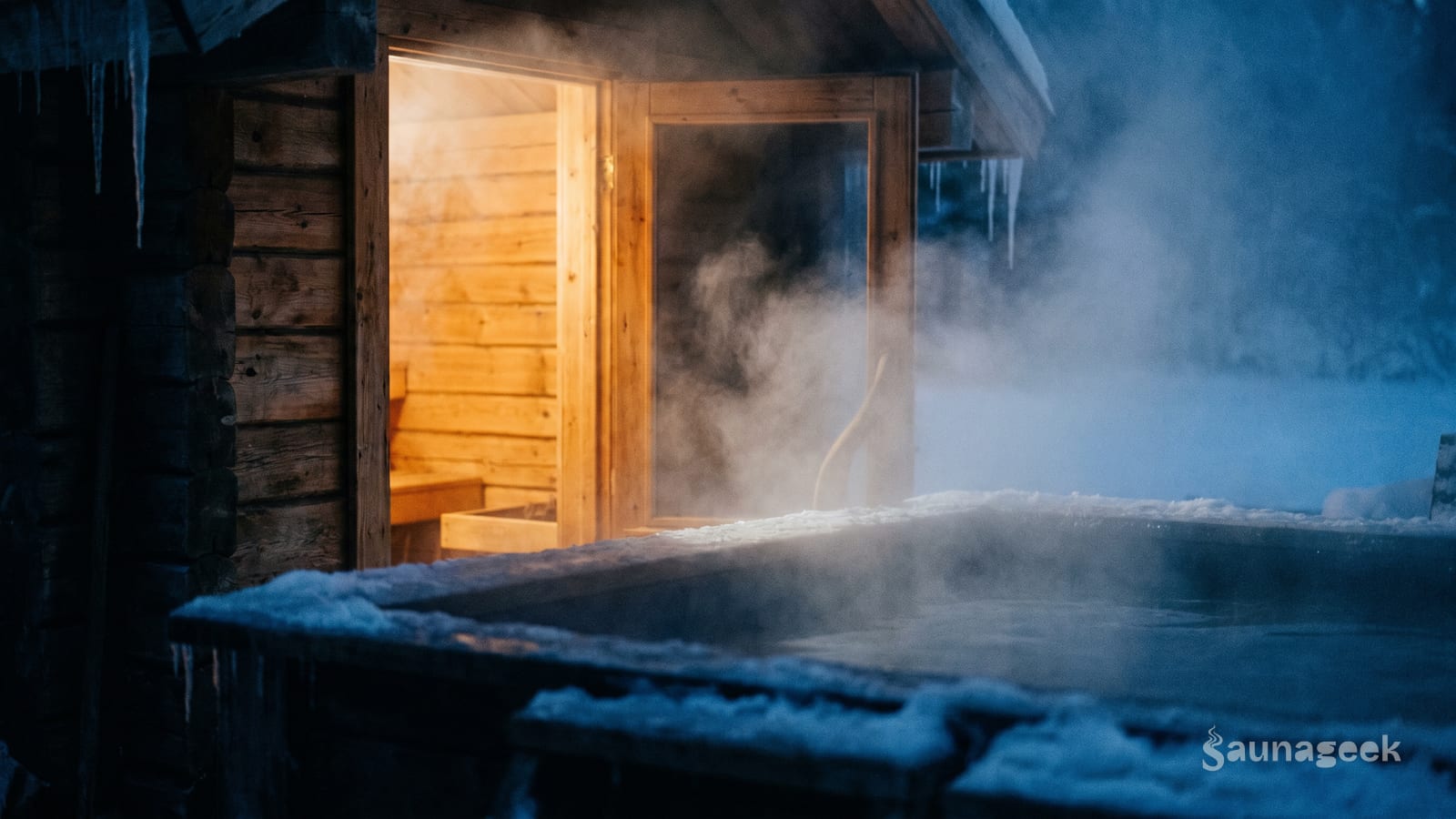
Contrast therapy sounds like a wellness trend. It is not. Finnish sauna culture has paired heat with cold for centuries because the temperature swing is genuinely useful. You feel better, recover faster, and sleep sounder. The equipment required is a sauna and something cold. That is it.
Here is what the commercial wellness sites get wrong: they make it sound complicated and expensive. It is neither. You can start with a cold shower.
Why Finnish Sauna Culture Invented the Cold Finish
In Finland, cooling down after the sauna is not optional, it is how you get the full experience. You heat up, you pour löyly, and then you cool off. Repeat. The cycle is the point.
The logic is practical. Heat opens everything up. Blood vessels dilate, pores open, muscles loosen. Cold resets the system. Blood vessels constrict, pores close tight, the nervous system swings from sympathetic activation to parasympathetic recovery. You feel more alive after the cold than you did before the heat.
This is not a modern wellness discovery. It is a practice older than most of the infrastructure we now use to discuss it. The Finnish tradition understood the value of the temperature swing long before anyone wrote a paper on it.
What Happens to Your Body When You Go from Hot to Cold
The physiology is straightforward.
Heat causes vasodilation. Blood vessels near the skin expand to radiate heat. You feel flushed, relaxed, slightly sedated.
Cold causes vasoconstriction. Blood vessels tighten sharply. Blood is pushed toward the core. This is uncomfortable for about 30 seconds, then you feel a wave of warmth and clarity as your circulation adapts.
The alternation between these states pumps your circulatory system. Over time, regular contrast exposure improves vascular elasticity and cardiovascular adaptation. You are essentially giving your circulation a workout.
There is also an adrenaline and endorphin component. The cold hit triggers a rush that clears mental fog and sharpens focus. This is not placebo. The response is physiological and reproducible.
The Benefits of Adding Cold to Your Sauna Routine
Faster muscle recovery. The cold constricts blood vessels and reduces metabolic waste accumulation after training. Combined with the prior heat increasing blood flow and delivering nutrients, you get a better recovery cycle per session than heat alone.
Better circulation and cardiovascular adaptation. Regular contrast exposure improves how your blood vessels respond to temperature changes. This has measurable effects on vascular health over time.
Sharper mental clarity and energy. The adrenaline spike from cold exposure is brief but useful. Most people report feeling significantly more alert after a cold round.
Stronger immune response. Some studies suggest regular cold exposure supports immune function. The mechanism involves stress hormone adaptation and improved inflammatory regulation.
Stress tolerance and mood. Cold exposure trains your autonomic response to stress. Over time, this generalizes. People who do regular contrast therapy often report feeling less reactive to other types of stress.
Skin. Heat opens pores, cold closes them tight. A proper cool-down after sauna leaves your skin in better condition than skipping the cold finish.
Sleep quality. Evening contrast therapy improves sleep onset for most people. The caveat is timing: if you do it too late, the adrenaline component can keep you up. Finish your cold rounds at least 90 minutes before bed.
Sauna Cold Protocol: How to Do It
- Start in the sauna. Twelve to 20 minutes at 80 to 90 degrees Celsius (175 to 195 Fahrenheit). You want to be thoroughly warm but not exhausted before the cold.
- Cold exposure: two to five minutes. Cold shower, plunge, or whatever you have available. You want to be uncomfortable but not shivering uncontrollably. If you cannot breathe normally for the first 30 seconds, that is normal.
- Two to three rounds of this cycle. Sauna, cold, rest briefly, sauna, cold. The second and third rounds feel different from the first. That is the contrast effect building.
- Always finish on cold. This is the recovery and reset step. Finishing on heat leaves your system inflamed rather than recovered.
Frequency: two to three times per week is a good starting point. You do not need to do this daily. The adaptation happens between sessions.
If you are new: start with a cool shower, work up to cold over a week or two. Jumping into an ice bath on day one is how people decide contrast therapy is not for them.
Cold Options: What to Use If You Do Not Have a Cold Plunge
Most people do not have a dedicated plunge tub. You do not need one.
Cold shower. The most accessible option. Turn the temperature down gradually if full cold on day one is too much. Aim for water that feels genuinely cold, not lukewarm. Thirty seconds of uncomfortable cold is enough to trigger the response.
Lake or ocean. Seasonal but excellent. Open water adds the benefit of voluntary exposure discipline, which has its own mental training value. Water temperature below 15 degrees Celsius (59 Fahrenheit) counts.
Garden hose. Summer option. Not glamorous, but functional. Aim the hose at your torso and legs. The shock is real and effective.
Dedicated cold plunge or ice bath. If you want to go all in, a purpose-built plunge or a converted cooler with a lid is a reasonable investment. You can achieve water temperatures of 3 to 8 degrees Celsius (37 to 46 Fahrenheit) with enough ice. Most people do not need this level to get the benefits.
Target temperatures are not as important as the subjective experience. Cold enough to feel a genuine physiological response is the goal. Ice bath cold is not necessary.
Safety First: Who Should Skip It
Contrast therapy is not appropriate for everyone.
Heart conditions and uncontrolled high blood pressure are the primary concerns. The rapid temperature shifts and circulatory stress are meaningful in ways that can be dangerous if your cardiovascular system is already compromised. Check with your doctor if you fall into either category.
Pregnancy is another situation where you should consult a professional before practicing contrast therapy.
Stay hydrated. Heat and cold both stress your system. Water before, during if accessible, and after is not optional.
Do not overdo duration. Two to five minutes in the cold is sufficient. Ten minutes will not give you a better result; it will give you hypothermia if the water is cold enough.
If you feel dizzy, nauseous, or disoriented at any point, stop. These are not signs of a good workout. They are warning signals.
Common Mistakes
Finishing on heat instead of cold. You complete a session and think a long, slow cool-down in the sauna sounds pleasant. It is not. You end up inflamed and sometimes with a headache. Always end on cold.
Staying in the cold too long. The goal is a physiological response, not an extreme endurance test. If you are shivering hard, you have been in too long. Shivering means you are no longer in the recovery zone.
Not hydrating. Dehydration before a contrast session compounds the stress on your system. Drink water before you start.
Going too hard too fast. This is the mistake most likely to make people quit. Start with cool showers, graduate to cold showers over a couple of weeks. Your body adapts and the cold becomes less shocking each time.
Doing it too late in the day. The adrenaline response from cold exposure is real. If you finish a session at 9 PM and wonder why you cannot fall asleep, this is why. Schedule your cold rounds to end at least 90 minutes before bed.
Frequently Asked Questions
Cold shower vs. cold plunge: is either better?
For the physiological benefits, both work. The plunge gets you into colder water, which means a stronger stimulus in a shorter time. A cold shower can achieve the same effect with more time. Neither is categorically superior. Use what you have.
Should you shower before or after sauna first?
Before, if you are doing the contrast protocol. Clean skin and wet hair reduce the amount of heat you retain and make the transition more comfortable. Shower off sweat before your first round.
Can you do this every day?
You can, but it is not necessary for the benefits. Two to three sessions per week is sufficient for adaptation and recovery. Daily use does not accelerate results and increases systemic stress load.
What about infrared sauna + cold?
Infrared operates at lower ambient temperatures than traditional dry sauna. The heat exposure is different in character. You can still apply a cold finish to an infrared session. The contrast effect still works even if the heat input is gentler.
Does it help with weight loss?
Cold exposure increases brown fat activity and can slightly elevate metabolic rate, but this effect is modest. The real weight management benefit of contrast therapy is improved recovery, which supports consistent training. It is not a shortcut.
The cold finish is simple. You sit in heat, you stand in cold, you repeat. You do not need a plunge tub, a membership, or expensive gear. Start with your shower. Adjust from there.