
Sauna Cold Plunge – A Practical Guide to Contrast Therapy
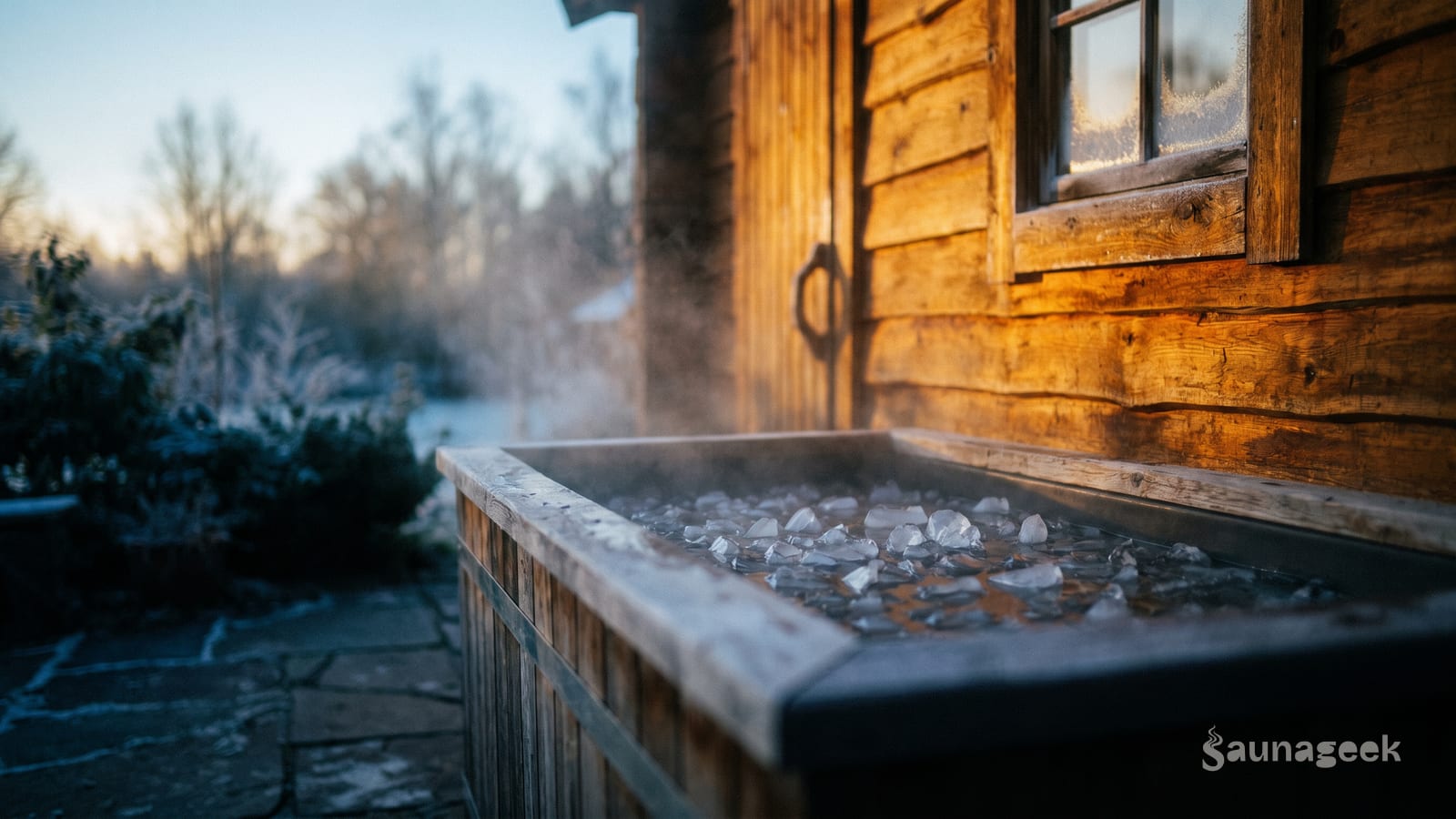
Alternating between sauna heat and cold water immersion is called contrast therapy, also known as the Nordic Cycle. Finns and Scandinavians have been doing this for centuries. The magic is in the switch itself: the heat-to-cold transition is what drives the benefits, not either extreme on its own.
If you have a sauna and any way to get cold, you have everything you need.
How It Works: The Science of Contrast Therapy
Heat makes your blood vessels dilate. Your heart rate climbs, muscles loosen, and you sweat. Jump into cold water and the opposite happens: blood vessels constrict, adrenaline spikes, and mental clarity hits you like a wave.
The real mechanism is the alternation itself. Each time you move from heat to cold, your circulatory system acts like a pump, flushing metabolic waste products out of muscle tissue. Over time, regular contrast therapy is associated with better peripheral blood flow and improved vascular function.
You also get an endorphin and adrenaline rush from the cold exposure. It wakes you up in a way that morning coffee cannot replicate.
Key Benefits
Circulation and Cardiovascular Health
Every round of dilation and constriction exercises the walls of your blood vessels. Think of it as cardio for your arteries. Long-term practitioners often report better peripheral circulation, and some research links regular contrast therapy to lower blood pressure over time.
This is not a replacement for actual cardio, but as a supplement it has real merit.
Muscle Recovery
Heat reduces muscle tension. Cold reduces post-exercise inflammation. The sequence matters: heat first loosens things up, the cold closes the door on the swelling. The lactic acid flush is real and athletes notice the difference the next day.
If you train hard and want to move well the following session, contrast therapy is one of the most accessible tools available.
Immune Function
Cold exposure is linked to increased white blood cell activity. Stack that with regular sauna use and the data suggests fewer sick days from respiratory infections. The mechanism is not fully understood, but the association shows up consistently.
Mental Health and Stress Resilience
Cold triggers a norepinephrine release. Mood improves. Focus sharpens. That part is well-documented.
What competitors rarely cover is the autonomic nervous system angle. Regular contrast therapy trains your system to switch between sympathetic (alert, stressed) and parasympathetic (rest, recover) states more efficiently. You become more resilient to everyday stress. The practice of voluntarily entering cold discomfort and surviving builds something real.
Skin and Appearance
Sauna opens pores and promotes sweating, which cleans out the skin. Cold tightens pores and improves skin tone. Done consistently, the combination produces better complexion results than either therapy alone.
The Basic Protocol
| Element | Recommendation |
|---|---|
| Sauna temp | 80-100 °C (176-212 °F) traditional dry |
| Sauna time | 12-15 minutes per round |
| Cold plunge temp | 3-10 °C (37-50 °F) for ice bath; cold shower works for beginners |
| Cold time | 2-5 minutes per round |
| Cycles | 2-3 rounds |
| Always finish | On cold, never hot |
Sauna First or Cold First?
For contrast therapy benefits, sauna first is the standard approach. Heat relaxes and prepares the muscles, cold closes the loop and controls inflammation. Finish on cold and you prevent post-heat vasodilation from compounding swelling.
For cold exposure as the primary goal, cold first is valid and more challenging. Mental resilience and immune benefits can be the priority, and the order shifts accordingly.
Either way: always finish on cold.
What If You Do Not Have a Cold Plunge?
Use a cold shower. It works. Wild swimming in a lake or ocean is excellent if you have access. Even pouring cold water over your head is better than skipping the cold entirely.
The temperature differential is what matters, not the specific method.
Who Should Skip the Cold Plunge
Some people should not do cold immersion without medical clearance:
- Uncontrolled high blood pressure: cold causes an acute blood pressure spike
- Heart conditions or abnormal heart rhythms
- Pregnancy
- Raynaud’s phenomenon or cold urticaria
Get medical advice before starting if you have any cardiovascular condition. This is not a gray area.
Practical Tips
Keep the sauna and cold source physically close. The transition matters and a long walk between them dilutes the effect.
Stay hydrated. You are losing fluid through sweat and cold immersion diuresis. Drink more water than usual.
Skip alcohol before contrast therapy. It amplifies vasodilation and significantly increases the risk of fainting.
Start with 2 cycles. Build up to 3 over weeks, not days.
The first cold plunge of any session is always the hardest. It gets easier. This is not a metaphor.
FAQ
Should I do sauna or cold plunge first? For contrast therapy, sauna first. For cold exposure as the primary goal, cold first is valid. Either way, finish on cold.
How cold should the water be? 3-10 °C (37-50 °F) for a proper ice bath. Cold shower is fine for beginners. The key is that it needs to feel genuinely cold, not just cool.
How long should I stay in the cold? 2-5 minutes per round. Do not max out every round. 2 minutes of genuine cold is more useful than 5 minutes of tolerance-building suffering.
How many rounds should I do? Start with 2. Build to 3 over time. More is not better.
Can I do contrast therapy every day? Yes, if you are healthy and cleared to do so. Daily practice is common in Finland. Listen to your body.
Is it safe if I have high blood pressure? If it is controlled and you have medical clearance, it may be fine. If it is uncontrolled, skip the cold plunge. Consult your doctor first.
What if I do not have a cold plunge? Cold shower. Wild swimming. A bucket of cold water. The method is flexible. The temperature differential is not.