
Smart Sauna Controllers: Everything You Need to Know Before Buying
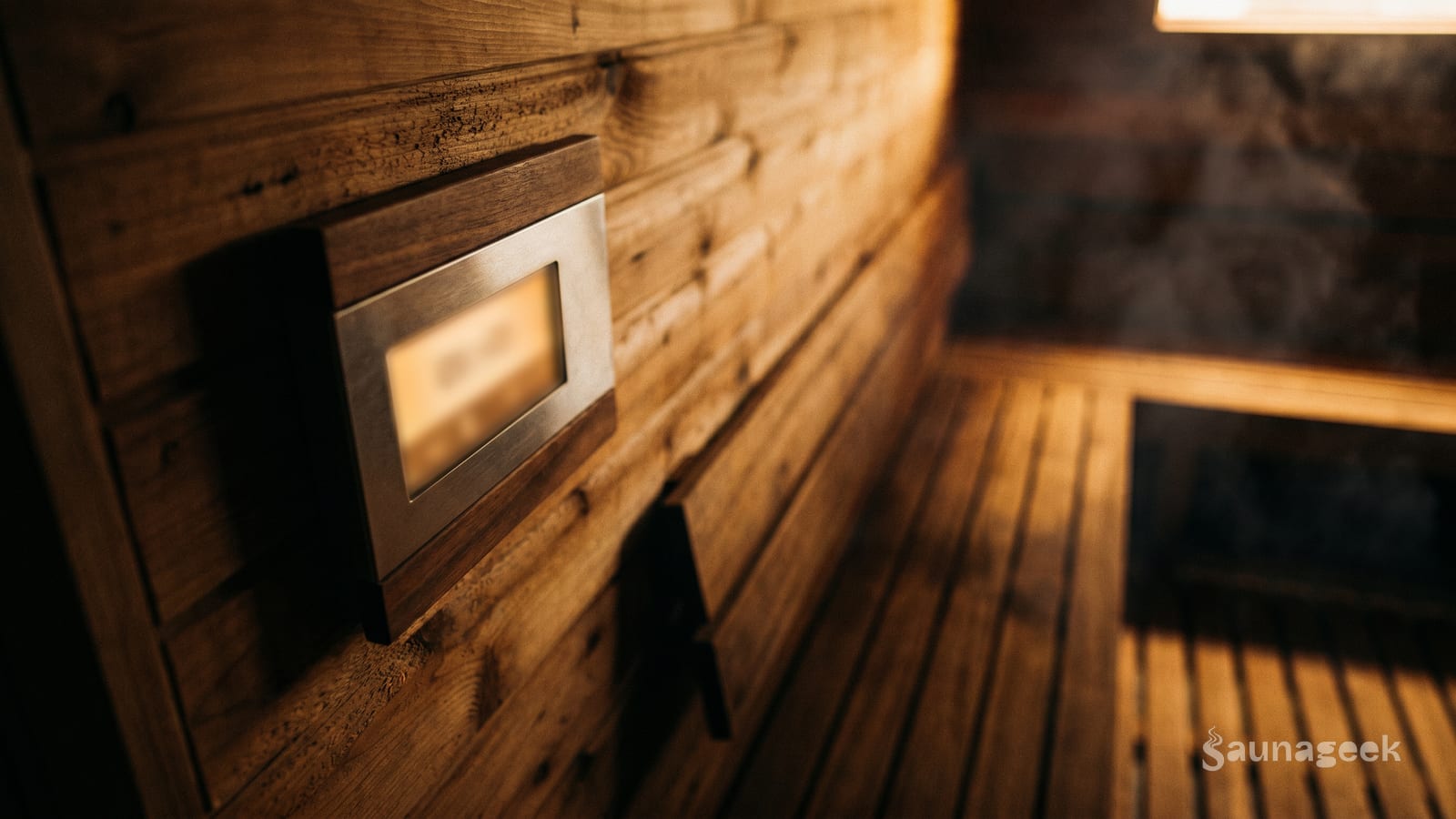
A smart sauna controller is a device that replaces your basic thermostat or mechanical timer with app-based control, scheduling, and remote access. It sits between the mains power and your electric sauna heater, letting you start a session from your phone, adjust the temperature while you’re still in bed, or set a weekend routine so the sauna is ready before you are.
If you have an electric heater sauna, adding a smart controller is one of the highest-impact upgrades you can make. The technology has matured enough that reliability issues from a few years ago are largely sorted. Here’s what actually matters before you buy one.
What Is a Smart Sauna Controller?
A smart sauna controller is an electronic control system that manages your sauna heater. It replaces two separate components you might already have: a mechanical timer (the clockwork dial that runs for a set period) and a basic thermostat (usually a simple knob with limited accuracy).
The typical setup has three parts:
Control panel. Mounted inside or near the sauna. This is your interface when you’re standing in the room. Most panels are touch-screen or button-based.
Relay box. Installed outside the sauna, typically near the heater. This is the actual switch that turns the heater on and off based on signals from the panel.
Wi-Fi module. Connects the system to your phone app. Some controllers also support direct local network control without routing through the manufacturer’s cloud.
The key point most articles skip: a smart controller is an add-on to your existing electric heater. It is not a heater itself. You still need the heater. If someone tries to sell you a “smart sauna” that is just a controller, you are getting half the system.
Traditional vs. Smart - What’s Actually Different
| Traditional | Smart | |
|---|---|---|
| Temperature precision | Dial: about 5°C increments | App: 1°C increments |
| Remote start | No | Yes |
| Scheduling | Basic timer, on/off only | Weekly programs, multiple sessions |
| User profiles | None | Multiple profiles for different household members |
| Voice control | No | Via Alexa/Google Home on most systems |
| Safety: auto shut-off | Some models | Standard on most |
| Safety: child lock | Rare | Common |
| Wi-Fi dependency | None | Standalone still works; app requires Wi-Fi |
| Cost | Included with basic heaters | 200–600 EUR additional |
Traditional controls are still the right call in a few situations. Rentals where you do not control the electrical setup. Households with elderly users who find app interfaces confusing. Locations without reliable Wi-Fi. And honestly, some people just prefer the simplicity.
But if you have ever waited 30 minutes for your sauna to heat up after getting home, smart control solves that.
How Smart Sauna Controllers Work
Here is what happens when you tap “Start Sauna” in the app:
- Your phone sends the command over the internet to the manufacturer’s cloud server.
- The cloud server relays the instruction to the controller’s Wi-Fi module.
- The relay box switches on the mains voltage to the heater.
- The temperature sensor (usually mounted near the ceiling of the sauna) feeds real-time data back through the relay box to the controller.
- The controller uses PID-style temperature correction to keep the heater within about 1°C of your target.
This matters because heat stratification in a sauna is real. The ceiling can be 20°C hotter than the bench level. Most smart controllers let you set which sensor controls the temperature: use the bench sensor if you sit low, the ceiling sensor if you want it genuinely hot up top.
On systems like the HUUM UKU WiFi, the cloud connection means you do not need to be on the same network as the sauna. Start it from the office, arrive home to a ready sauna. Some competitors require local network access, which is worth checking before you buy.
One important limitation: this is relevant for electric heater saunas only. Wood-burning saunas run on different principles and are not compatible. Infrared saunas use a separate ecosystem, often with proprietary control systems that do not play nicely with third-party controllers.
Key Features to Look For
Here is what to look for when buying:
- App platform. iOS and Android are standard. Check that the app has recent updates and decent store reviews.
- Remote range. Cloud-based systems work from anywhere. Local-only systems require you be on the same Wi-Fi network.
- Weekly scheduling. Most controllers support this. The quality of the scheduling interface varies.
- User profiles. Nice for households with multiple users who have different temperature preferences.
- Lighting and ventilation integration. Some controllers can switch your sauna lights or exhaust fan alongside the heater. Others do not.
- Safety locks. Child lock prevents accidental activation. Look for this if you have young kids.
- Temperature range. Most controllers handle 30–110°C, which covers any residential sauna.
- Maximum heater wattage. Controllers are rated for a maximum load. A controller rated for 9kW will not safely handle a 15kW heater.
- Open or closed cloud. Some systems let you bypass the cloud entirely and control locally. Others require the manufacturer’s servers to always be online.
Top Smart Sauna Controllers
These are the main options worth knowing about.
HUUM UKU WiFi
The HUUM UKU is one of the most widely discussed smart controllers. It works with any manufacturer’s electric heater up to 18kW, which is a genuine advantage. You are not locked into the same brand ecosystem. The UI is clean, the app works reliably, and the cloud connection means you can start your sauna from anywhere without VPN or network configuration.
The trade-off: HUUM requires a compatible heater or confirmation that your existing heater’s control voltage is compatible. Read the spec sheet carefully.
Harvia Xenio and Fenix
Harvia makes the Xenio and Fenix controllers, and the ecosystem approach matters. Harvia heaters designed for Xenio integration work seamlessly with it. The MyHarvia app covers the basics. The real advantage is Harvia’s size: one of the largest sauna equipment manufacturers in the world, so support and spare parts are unlikely to disappear.
The limitation: Harvia controllers work best with Harvia heaters. Mixing brands is possible in some cases but requires checking voltage compatibility carefully.
Saunum
Saunum is a smaller Scandinavian manufacturer with smart controllers that compete with HUUM. Outside Scandinavia, support infrastructure is thinner. If you are in Finland or Sweden, it is a credible local option. For other markets, availability and service may be harder to verify.
SaunaLogic2
The SaunaLogic2 is different from the others on this list. It is an integrated control system for Finnleo saunas, not a retrofit controller. If you are buying a new Finnleo cabin or replacing a complete control setup, SaunaLogic2 gives you full panel control including lighting, temperature, and session timing.
This is the right choice for a new Finnleo build. It is not a retrofit option for other setups.
Smart Controller Installation - What to Expect
The installation scenario depends entirely on what you are starting with.
New sauna build. This is the easiest case. You wire the relay box to the 240V circuit feeding the heater, run the sensor cable to the sauna interior, mount the control panel, and connect to Wi-Fi. Electricians know what to do. A straightforward installation takes a few hours.
Retrofitting an existing electric sauna. This is the most common scenario. You are replacing an existing controller or timer/thermostat combination. The existing wiring may or may not be compatible with a smart controller’s requirements, and in some cases a dedicated 240V circuit needs to be installed. Budget for an electrician visit, typically 150 to 400 EUR depending on complexity.
Upgrading from a basic digital controller. If your heater already has a digital timer and thermostat, you may be able to replace it with a smart controller in the same physical footprint. Some HUUM models are designed for this. Others require a separate relay box installation.
The wiring note that matters: most residential electric sauna heaters run on 240V. This is not a DIY job unless you are a qualified electrician. The risk is not just electrical shock. Improper wiring can create a fire hazard in a heated wooden enclosure. The “do not install yourself” warnings exist for a reason.
Energy and Practical Considerations
A smart controller draws 5 to 10W in standby. That is roughly 1 to 2 EUR per month depending on your electricity rate. It is not zero, but it is not significant either.
The scheduling feature provides the real efficiency gain. If you heat the sauna twice a week for one hour each session, that is about 20kWh monthly from the heater itself. A smart schedule that preheats only when you actually plan to use the sauna eliminates the “I might use it tonight” idle heating that people sometimes do with always-on setups.
Most controllers log session data. After a few months, you can see your actual usage patterns. Some people find this surprisingly motivating, like seeing your electricity consumption on a smart meter.
What you lose going smart:
Wi-Fi dependency. If your router goes down, the app stops working. Most controllers still work from the physical panel, but you lose remote start.
Cloud service risk. If the manufacturer pivots, is acquired, or stops maintaining the app, your controller may become a physical-panel-only device. HUUM and Harvia are large enough that this risk is lower, but it is not zero for any software-dependent hardware. The same trade-off you accept with any smart home device.
FAQ
Can I add a smart controller to my existing sauna heater? If you have an electric heater, almost certainly yes. Most smart controllers are compatible with any electric sauna heater that uses a standard control voltage. The limitation is wattage: make sure the controller’s maximum rating covers your heater. Wood-burning heaters are not compatible.
Do smart controllers work with infrared saunas? Mostly no, but it depends. Infrared cabins typically use proprietary control systems that are not compatible with third-party smart controllers. Some infrared setups have simple on/off switching that a smart plug could handle, but you lose temperature precision and safety features. If you have an infrared cabin, check the manufacturer’s specs before buying any smart controller.
What happens if my Wi-Fi goes down mid-session? The sauna keeps running. The physical control panel is independent of the Wi-Fi connection. You will not freeze in the middle of a session. You just will not be able to use the app until Wi-Fi is restored.
Are smart sauna controllers safe? Yes, when properly installed. Auto shut-off is standard on most models, which cuts power if the temperature sensor fails or reads an unsafe value. Child locks prevent accidental activation. The electrical safety risk is in the installation, not the controller itself. Use a qualified electrician.
How much does a smart controller cost to run? The standby power draw is about 5 to 10W. Over a year, that is roughly 15 to 25 EUR at typical European electricity rates. The controller does not add meaningfully to your electricity bill. The sauna heater itself is where the consumption is, and a smart schedule can reduce that by ensuring the heater only runs when you actually use the sauna.