
How to Replace a Sauna Element – A Brand-Agnostic DIY Guide
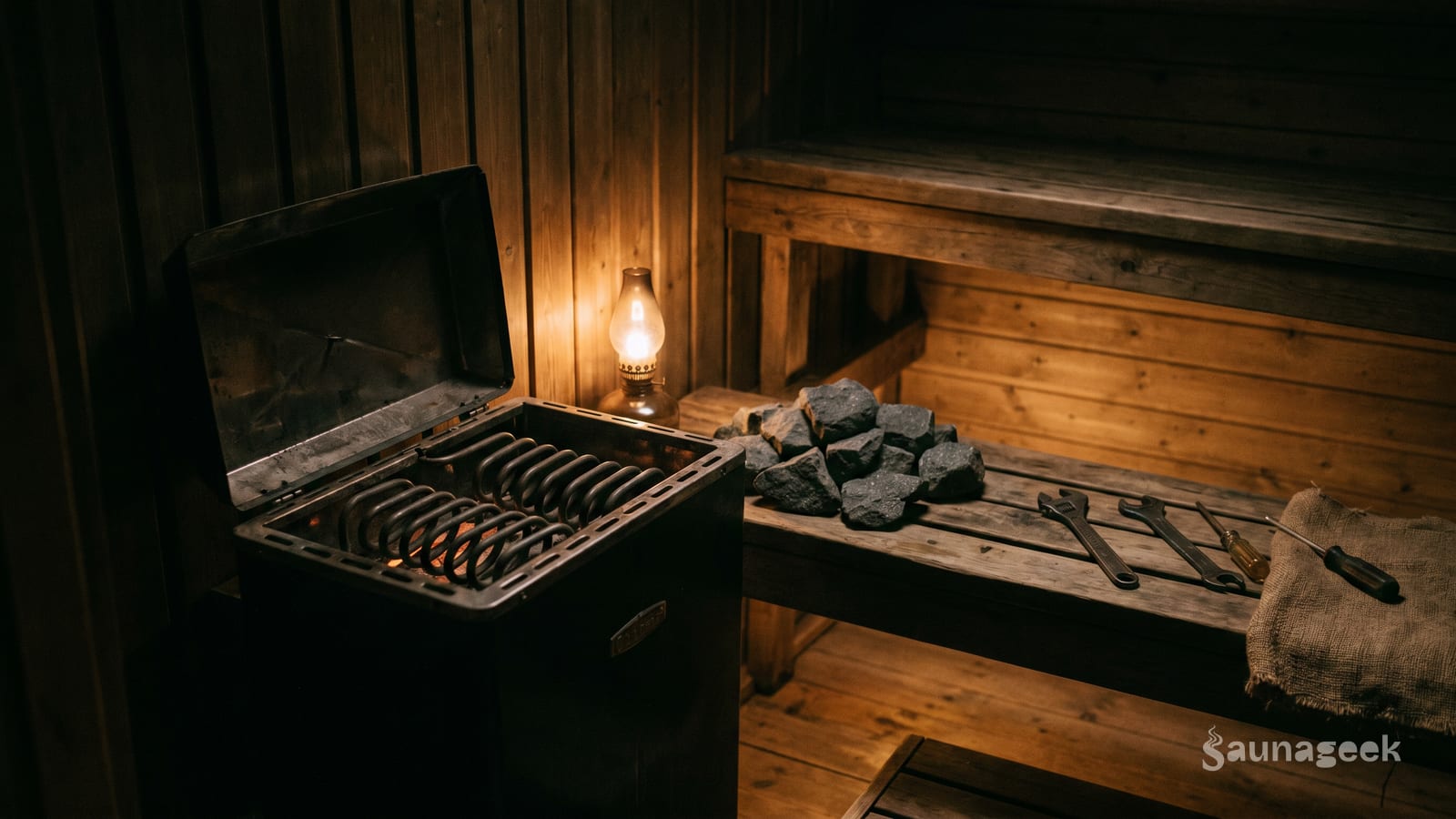
Your sauna heater is taking longer to heat up than it used to. Or it will not heat up at all. Before you call an electrician or start shopping for a new heater, there is a good chance the culprit is a single worn-out heating element, and that you can fix it yourself in under an hour.
Element replacement is one of the most straightforward sauna repairs. You are swapping one component for a like-for-like replacement. If you have replaced a water heater element or a dishwasher heating element before, you can handle this. This guide is brand-agnostic. Whether you run a Harvia, HUUM, Sawo, Finlandia, or something else, the core process is the same.
Is Your Sauna Element Actually the Problem?
Before ordering a replacement, confirm the element is the problem.
Symptoms that point to a failing element:
- Heater runs but takes significantly longer to reach temperature than it used to
- Some rocks stay cool while others heat up (one element out, one still working)
- No heat at all, but the control panel powers on and the timer runs
- Visible corrosion or mineral buildup on the element coils once you open the heater
- A burnt smell from the heater unit, especially on first use after a long rest
Symptoms that point elsewhere:
- Heater will not turn on at all. Check the timer, power switch, and circuit breaker first.
- Heater trips the breaker immediately. This could be a short in the wiring or a failed contactor, not the element.
- Heat runs fine for 20 minutes then cuts out. This is typically a thermal cutoff or thermostat issue.
The no-heat decision tree:
- Breaker on? Power reaching the heater?
- Timer and control panel functioning?
- Contactor clicking when the heater calls for heat?
- If all yes but no heat: element is the next thing to check.
A multimeter can confirm. An element drawing no current is dead. But even without one, the visual evidence inside the heater chamber is usually enough.
What You’ll Need
Gather these before you start.
- Phillips head screwdriver
- Nut driver or adjustable wrench (8mm and 10mm are common sizes)
- Multimeter (optional but helpful)
- Phone or camera to photograph wiring before you disconnect anything
- Small container for stones and hardware
- Work gloves
You do not need an electrician for this. This is a component swap, not a rewire. You are only touching the connections at the element terminals, which are designed for removal and replacement.
How to Replace a Sauna Heating Element
Step 1: Kill the power
Turn off the circuit that supplies the sauna heater at the breaker panel. Then verify with a non-contact voltage tester at the heater junction box. This step is not optional.
Step 2: Access the heater
Empty the stones from the heater chamber into your container. Keep them organized; you will be putting them back. Remove the top grate or access panel according to your heater design.
Stones that are crumbling, compacted, or heavily mineralized should be replaced. Old stones block airflow around the element, which causes the new element to overheat and fail prematurely. If your stones are more than two to three years old and look degraded, replace them when you replace the element.
Step 3: Document the wiring
Before touching anything, take photos of the element and its wiring from multiple angles. Note which terminals the wires connect to. This is your map for reassembly.
Step 4: Disconnect and remove the old element
Elements are held in place by a mounting bracket with screws or nuts. Remove the fasteners, then disconnect the wire leads. Some elements use spade connectors. Others use screw terminals. If your heater has a single element, there will be two wire leads. A dual-element heater will have four.
If the wires are brittle or the connectors are corroded, clean or replace them while you have the heater open.
Step 5: Install the new element
Match the new element terminal configuration to the old one. Connect the wire leads to the correct terminals. Polarity does not matter for resistive heating elements, but the circuit must be complete. Transfer any grounding strap or bracket to the new element.
Step 6: Reassemble
Mount the new element in the bracket. Then redistribute the stones around the element, leaving gaps for airflow. Do not just dump them back in. Compacting stones tight against the new element is the most common mistake that leads to early element failure.
Step 7: First heat-up
Turn the breaker back on. Set the heater to a moderate temperature, not full blast. Watch the chamber for the first 15 to 20 minutes.
Normal: Element glows dull red. Stones warm evenly. No sparks. A brief burning smell from manufacturing residue is normal.
Investigate: Element glowing white-hot or sparking at terminals (trip the breaker and check airflow and wiring). Burning smell persisting beyond five minutes.
Getting the Right Replacement Element
Three factors determine compatibility: wattage, voltage, and physical dimensions.
Wattage and voltage must match your heater specs. A 6 kW heater running on 240V uses elements rated for that combination. A lower-wattage element means slower heat-up. A higher-wattage element risks overheating wiring and voiding certifications.
Physical dimensions matter more than most people expect. Elements come in different lengths and coil diameters. One that is too long will not seat properly. One that is too short will not have enough surface area in contact with the stones.
Where to buy: Sauna dealer first. Manufacturer direct is reliable but slower. Third-party suppliers (SteamSaunaBath, Amazon with verified part numbers) work if you are certain of the match.
Warranty check first. Many heaters have one-year element coverage. Check before buying.
Brand notes: Harvia elements (KIP, Vega, Classic, Flame) are widely stocked. HUUM (HIVE, DROP, UME) uses a vertical configuration and generic substitutes are harder to find. Sawo elements are relatively standardized. Finlandia Prelude and Finlo use a circular configuration; match dimensions carefully.
Dual-Element Heaters
Many residential electric sauna heaters run two elements rather than one. Harvia Classic, Vega, and KIP series are common examples.
Two elements are wired in parallel. If one fails, the heater still produces heat but at roughly half output. If the heater heats but takes twice as long, you might have one dead element.
You can replace a single dead element without replacing a working one. Match the replacement to the existing specs. If both elements are failing, replace both at the same time. An old element drags down the new one’s performance.
DIY vs. Calling a Professional
| DIY | Professional | |
|---|---|---|
| Element part | $40 to $120 | $40 to $120 |
| Labor | $0 | $100 to $200 |
| Total | $40 to $120 | $140 to $320 |
The job is within DIY range if you are comfortable turning off a breaker and following written steps. Call a pro if the heater trips the breaker after you install the new element. That is a wiring issue, not an element issue.
Keeping Your Elements Healthy
Packed stones. Stones settle over time and restrict airflow around the element. Inspect and redistribute annually.
Water before the stones are hot. Throwing water on stones before they reach 70 degrees Celsius (160 Fahrenheit) adds thermal shock to the element.
Electrical surges. After a lightning strike or utility surge, check your elements for damage.
A properly maintained element lasts five to eight years in a home sauna.
Frequently Asked Questions
How do I know if my sauna element is bad? Slow heat-up, uneven stone temperatures, no heat with the control panel powered on, or visible corrosion on the coils. A multimeter reading of zero continuity confirms it.
Can I replace the sauna element myself? Yes. The steps in this guide are within the range of a competent DIYer who is comfortable turning off a circuit breaker and handling basic tools.
What if I install the wrong wattage element? A lower-wattage element produces insufficient heat. A higher-wattage element can trip breakers or overheat wiring. Always match the wattage and voltage to your heater model.
How long do sauna elements last? Five to eight years in a home sauna, depending on usage frequency and stone condition.
Can you replace just one element or do you replace all of them? You can replace one at a time if the other is still working. Replace both if both are failing, or if the heater is old enough that the remaining element is near end of life.
My sauna still will not heat after replacing the element. Now what? If the heater trips the breaker, will not turn on at all, or cuts out after 20 minutes, the problem is not the element. Check the timer, contactor, thermal cutoff, and circuit breaker. Call an electrician if those all check out.