
Steam Room vs Sauna – Key Differences and How to Choose
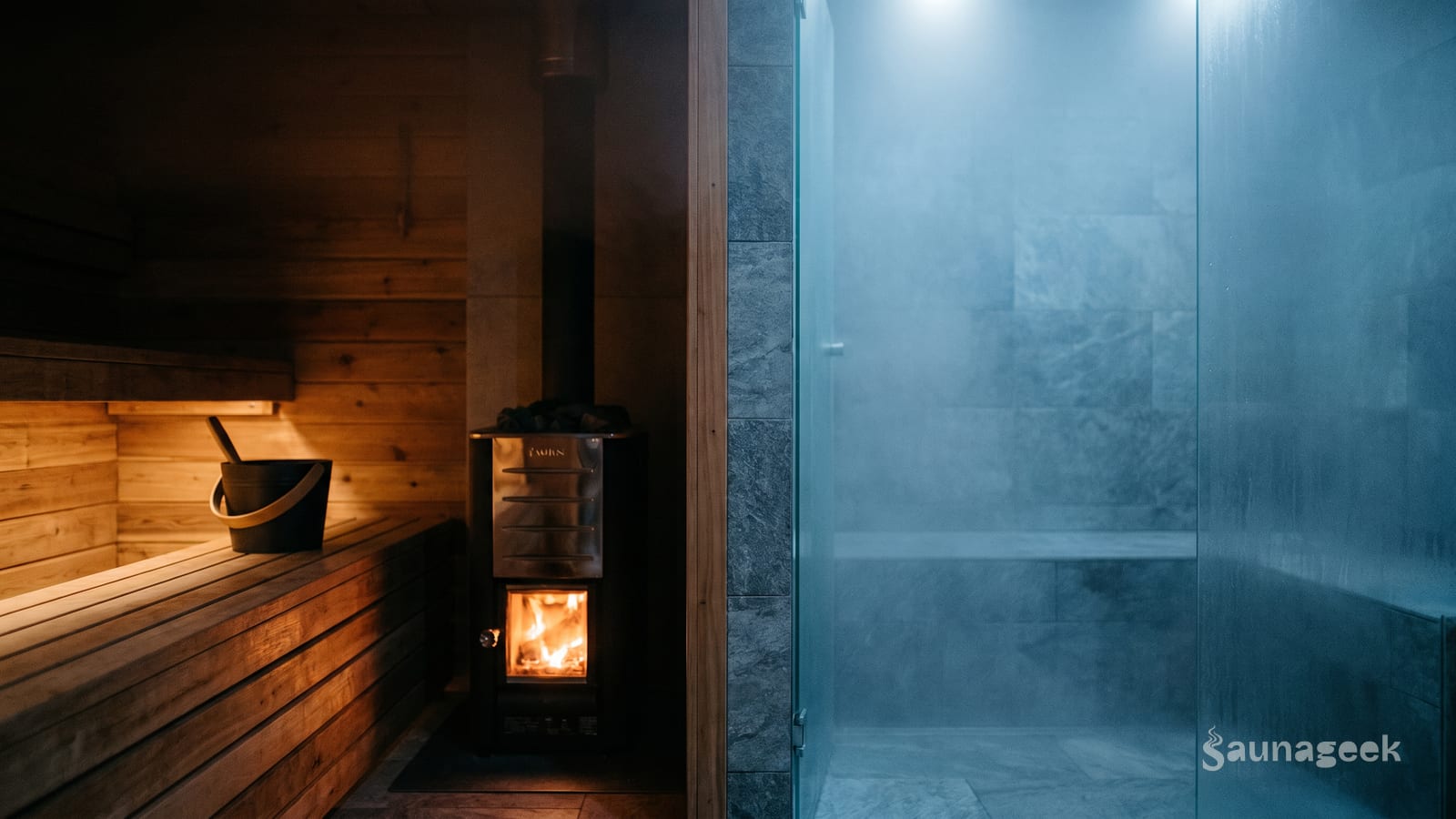
Steam Room vs Sauna - What’s the Difference?
Here’s the short version: a sauna uses dry heat, a steam room uses moist heat. That’s the core distinction, but it hides a lot of nuance that matters if you’re deciding where to spend your time.
| Sauna | Steam Room | |
|---|---|---|
| Temperature | 65-90°C (150-195°F) | 43-48°C (110-120°F) |
| Humidity | Low (5-20%) | Near 100% |
| Heat type | Dry, often with periodic steam bursts | Moist/humid |
| Typical experience | Intense, can be social, löyly rituals | Enveloping warmth, softer on skin |
| Research base | Strong (Finnish epidemiological data) | Moderate |
If you want the bottom line: saunas have a deeper research backing for cardiovascular and longevity outcomes. Steam rooms win on congestion relief and tolerateability for heat-sensitive people. Neither is a shortcut to detoxification or weight loss. Despite what the marketing says.
How Saunas Work - Dry Heat and Finnish Tradition
A sauna heats the air directly. You sit in a room where a stove (traditionally wood-burning, now usually electric or gas) heats sauna rocks. Pouring water on those rocks creates a burst of steam called löyly. That’s the moment Finnish sauna bathers call out “löyly!” It’s the ritual heart of the experience.
Dry heat works differently than humid heat. Because the air is dry, your sweat evaporates quickly. You feel hot, but your body can regulate temperature more effectively. The low humidity also means you can crank the temperature high without feeling suffocating.
There are a few sauna types worth knowing about:
Traditional Finnish sauna: the reference point. Wood-burning or electric stove, stones, löyly ritual. Usually 65-90°C (150-195°F) with humidity you control by ladling water.
Infrared sauna: heats the body directly with infrared panels rather than warming the air. Operates at lower air temperatures (40-60°C / 104-140°F). Popular in home setups. The research base is thinner than for traditional saunas, and some claims are overcooked.
Home sauna kit: a growing category. Pre-fabricated cabins you install indoors or outdoors. Can run traditional or infrared. Makes regular sauna use realistic if you have the space and budget.
A wet sauna, where humidity is deliberately raised for the whole session, exists. But it’s distinct from a steam room. Steam rooms generate 100% humidity from a dedicated steam generator. A wet sauna is more like a traditional sauna running at higher humidity.
How Steam Rooms Work - The Science of Humid Heat
A steam room has a dedicated steam generator that fills the room with near-100% humidity. The temperature sits lower than a sauna (43-48°C / 110-120°F) but feels intensely warm because humid air transfers heat to your body far more efficiently than dry air.
This is counterintuitive: you might assume a lower temperature means less stress on your body. Wrong. Because humid air conducts heat better, your core temperature rises faster in a steam room even at the lower ambient temperature. A 15-minute steam room session can push your core temperature up as effectively as a 30-minute dry sauna session.
That fast core temperature rise is why steam rooms are popular post-workout. Your body hits the thermal stress window for recovery benefits more quickly. It also explains why steam rooms can feel more taxing if you’re not prepared.
Steam rooms are typically tiled or lined with non-porous materials because the constant moisture would destroy wood or drywall. You won’t find löyly rituals here. The atmosphere is functional and damp.
Health Benefits of a Sauna
The research on dry saunas, particularly traditional Finnish saunas, is stronger than for steam rooms. This is partly cultural: Finland has been studying sauna use for decades, and the Sauna-Fi (Finnish sauna research) database is substantial.
Key benefits with decent evidence behind them:
Cardiovascular: Regular sauna use (4-7 sessions per week) is associated with reduced risk of cardiovascular disease, stroke, and hypertension in Finnish cohort studies. A typical session runs 15-20 minutes. The mechanism involves repeated acute cardiovascular stress (elevated heart rate, blood vessel dilation) that, over time, produces adaptive benefits similar to moderate exercise.
Blood pressure: Sauna use causes blood vessel dilation and can lower blood pressure during the session. For people with mild hypertension, regular sauna use may contribute to lower baseline readings.
Recovery after exercise: Sauna use after training reduces soreness and may accelerate performance recovery. The mechanism involves heat shock proteins and increased blood flow.
Relaxation: Less quantified but real. The Finnish concept of saunationalism (sauna as a daily refuge) reflects genuine mental health benefits. Reduced stress, improved sleep quality.
The evidence is observational for some long-term outcomes and interventional for short-term markers. It’s not a replacement for exercise or medical care. But the signal is consistent across multiple studies.
Health Benefits of a Steam Room
Steam rooms have a thinner research base. They are studied less, and the studies tend to be smaller. That said, some benefits are well-recognized:
Congestion and respiratory relief: Inhaling warm, humid air loosens mucus and opens nasal passages. This is why steam inhalation is a classic remedy for colds. In a steam room, you’re getting whole-body exposure at more consistent humidity than a bowl of hot water.
Muscle soreness recovery: The same fast core temperature rise that makes steam rooms efficient for post-workout use applies here. Increased blood flow to muscles helps flush metabolic byproducts. Some athletes prefer steam rooms for this reason: shorter sessions for comparable recovery benefit.
Skin hydration: The humidity temporarily plumps skin cells. This effect is short-lived (your skin normalizes within hours) but pleasant.
Circulation: Similar to saunas, humid heat causes vasodilation. Good for general circulation, potentially helpful for people with Raynaud’s or similar conditions.
Be honest about evidence quality here: steam room research is less extensive. The congestion benefit is clinically obvious. The recovery benefit has some support. Long-term health outcomes, if they exist, are less studied.
Which Should You Choose?
This depends on what you’re after. Here’s a practical decision framework:
You want long-term cardiovascular and longevity benefits: use a sauna. The evidence base is deeper and the dose-response relationship (more sessions per week, more years of use) is better characterized.
You’re recovering from exercise and want to reduce DOMS: steam room is efficient. Shorter sessions, faster core temperature rise, good for flushing metabolites.
You can’t tolerate high heat: steam room. The lower ambient temperature is genuinely easier to sit in, despite the humidity.
You want the social and cultural experience: Finnish sauna. The löyly ritual, the conversation, the multi-hour session, the sense of place. Steam rooms are functional. Saunas are experiential.
You have sinus congestion or a respiratory cold: steam room. The direct humid heat does what dry air can’t.
You have cardiovascular conditions: talk to your doctor first, but generally saunas have more clinical data for this population. Low blood pressure is a risk in both.
You want to lose weight: neither. You might see a scale number drop from water loss, which comes back when you rehydrate. Neither modality burns fat meaningfully.
Safety and Who Should Avoid Each
Both involve heat stress. Neither is appropriate for everyone.
Common risks for both:
- Dehydration: you will sweat significantly. Drink water before and after. Not during (give your body time to cool).
- Low blood pressure and fainting: heat causes vasodilation, which can drop blood pressure. Get up slowly. Don’t use either on an empty stomach or when hungover.
- Cardiovascular conditions: if you have arrhythmia, heart failure, recent MI, or similar, consult your doctor first.
- Pregnancy: avoid both. Core temperature elevation is a known risk.
- Alcohol: absolutely not before or during. Alcohol impairs thermoregulation and significantly increases risk of collapse.
Before your session: hydrate, don’t eat a large meal, start with a shorter session (5-10 minutes) if you’re new.
During: listen to your body. Dizziness, nausea, and headache are signals to get out.
After: cool down gradually. Shower, rehydrate, rest. Don’t jump into cold water without checking your blood pressure status first. Some people collapse.
Steam room specific: the near-100% humidity means mold is a risk in poorly maintained facilities. Choose clean facilities. The humidity can also aggravate skin conditions like eczema in some people.
Sauna specific: löyly safety: don’t pour water on rocks in an enclosed commercial sauna without checking ventilation. The steam burst raises humidity dramatically for 30-60 seconds.
Frequently Asked Questions
Can you detox in a sauna or steam room? No. Sweat is mostly water and salt. The “detox” claim conflates sweat with eliminating toxins. Your liver and kidneys do that job. You will lose water weight temporarily. Drink it back.
Should you shower before or after? Before: yes, it removes lotions and oils that can clog sauna wood pores. After: definitely, to rinse off sweat and any residual treatment products.
How long should you stay? Start with 10-15 minutes. Experienced users may go 20-30 minutes. There’s no benefit to marinating for an hour. Exit when you’re uncomfortable, not when you’ve “earned” more time.
Can you use one after a workout? Yes. Post-exercise is when many people get the most benefit. Wait until your heart rate has partially recovered from training. You don’t want to stack heat stress on top of maximal cardiovascular load. 15-30 minutes after training is reasonable.
Is a steam room the same as a wet sauna? No. A steam room runs near-100% humidity continuously from a steam generator. A wet sauna is a traditional Finnish sauna running at elevated humidity (typically 40-60%). You control löyly bursts in a wet sauna. Steam rooms give you no control: it’s always damp.
Do you need to drink water? Yes. Hydrate before and after every session. If you’re doing multiple rounds, sip water between. Avoid caffeinated drinks before. Caffeine constricts blood vessels and slightly impairs thermoregulation.