
The Smoke Sauna Ritual - What Actually Happens Inside
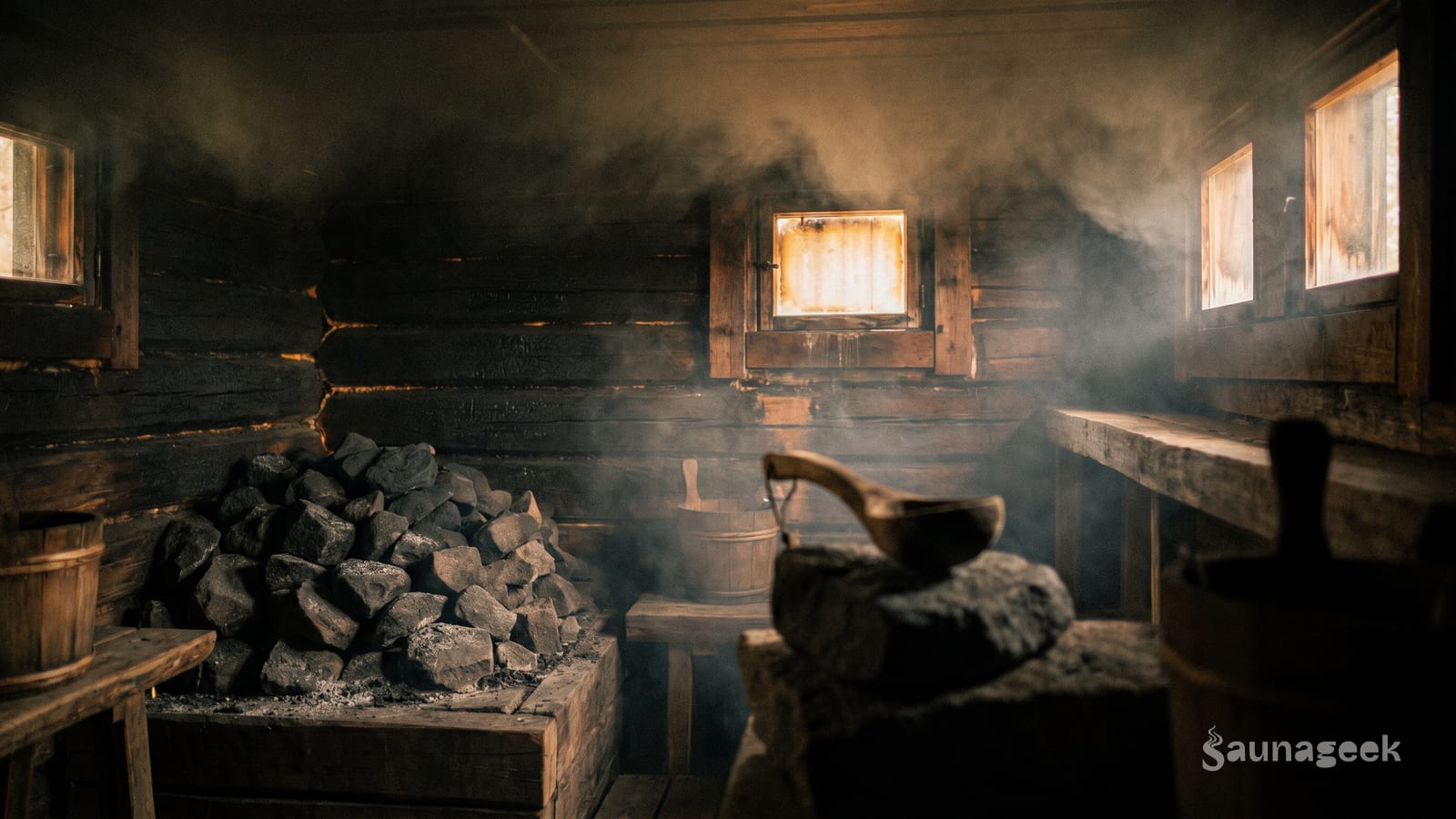
Walk into a smoke sauna before the fire is lit and it looks like any other log cabin. Rough-hewn walls, wooden benches, a stone structure in the corner. Then the door closes behind you and the darkness is total. You wait. A faint glow appears low in the kiuas, the wood-burning stove, and the room starts to fill with smoke. Not unpleasant smoke. Warm wood smoke, carrying the smell of birch and resin, drifting up toward the ceiling and settling around you like a second skin.
Twenty minutes later the heat arrives. Not the sharp, punchy heat of an electric sauna. Something slower. Softer. The kind that seeps in gradually and makes you realise you’ve been holding tension in your shoulders for years. That is a smoke sauna. And the ritual around it is unlike anything else in the sauna world.
What Is a Smoke Sauna?
A smoke sauna, savusauna in Finnish, is the oldest form of sauna in Finland and Estonia. The defining feature is simple: there is no chimney while the fire burns. The smoke fills the room for hours, coating the walls and the massive stone pile on top of the kiuas in a fine black layer. Only after the fire dies and the smoke clears do you bathe.
The kiuas itself is a wood-burning stove built from stacked stones with a firebox beneath. The stone mass sits on top, sometimes hundreds of kilograms, and absorbs heat slowly over 4 to 8 hours. The sauna room is built from logs, often untreated, which absorb the smoke and the scent over decades. A properly seasoned smoke sauna smells like a forest fire that has become furniture.
This is not a sauna you light in twenty minutes before your session. It requires commitment, and that commitment is part of what makes it different.
The Ritual Starts Before You Enter
The heating of a smoke sauna is act one of the ritual. Not admin. Not preparation. The first act.
Birch wood is the preferred fuel, hardwoods generally, with birch being traditional for the clean, hot burn and the scent it adds. Someone lights the fire and tends it continuously for hours, feeding small batches of wood to keep the flame low and steady. The stones need time. They have to absorb heat all the way through, not just scorch on the outside. Rush it and you’ll have a hot room with cold stones, which means no löyly worth having.
In a traditional household, this was the work of the sauna keeper, often the woman of the house, or whoever was designated. In a commercial or communal setting, this is handled for you. But if you’re invited to a Finnish summer cottage and the host mentions the sauna is being heated, showing up early to help with the fire is noticed. It is one of those cultural signals that communicates respect without a word being spoken.
The timing matters: you cannot drop in to a smoke sauna. Same-day advance notice at minimum, and realistically you’re planning half a day around it. This is not a convenience. It is the pace the ritual demands.
Clearing the Smoke and Reading the Sauna
Once the fire burns down and the last embers glow in the firebox, the smoke clearing begins. The door is cracked open, a ceiling vent if one exists is opened, and the smoke slowly exits. This takes 20 to 30 minutes. The room remains warm, the stones hold heat for hours, but the air gradually shifts from active combustion to something calmer. Resinous. Woody. The kind of smell that makes you want to breathe slowly.
You can tell a smoke sauna is ready by the smell more than anything. The acrid edge of burning wood gives way to a softer, settled scent. Temperature typically sits around 70–80°C (160–175°F) at bench level, lower than electric saunas on paper, but the heat quality feels more intense because of that massive radiant stone mass. The walls radiate back at you. There is no escaping the heat into a cool surface. You are inside it.
Inside the Smoke Sauna - The Bathing Rounds
A smoke sauna session is built around rounds. Each round follows a loose pattern, and most people do two to four rounds per session.
Enter quietly. Find a spot on the upper bench and sit. Let the heat settle on you. This is not a place to launch straight into conversation or check your phone, there is nowhere to put it that feels right. You sit. You breathe. The heat finds you.
Pour the löyly. The löyly is the water you throw on the stones to generate steam. In a smoke sauna, use less water than you think. The stones are enormous and the steam spreads differently than in a conventional sauna, slower, fuller, enveloping. Start with a small cup. See how it hits. Add more if you want. The steam in a smoke sauna feels softer than the sharp löyly of an electric sauna because the stone temperature profile is different. Less volatile, more sustained.
Use the vihta. The vihta is a bundle of birch twigs, usually cut fresh during the sauna session, with leaves still supple. Before you enter the sauna you soak it in a bucket of water. Inside, you use it to gently beat and sweep your skin, the leaves release a faint birch scent that mingles with the woodsmoke still clinging to the walls. Start light. Work systematically down your legs, across your back, over your shoulders. The sensation is stimulating, not punishing. It increases circulation, the leaves have a faint astringent quality, and the rhythmic motion is deeply relaxing. You would be missing the best part of the smoke sauna experience if you skipped it.
Stay until you have had enough. There is no timer. Typical rounds run 10 to 20 minutes, longer than a conventional sauna visit because the heat does not feel like an assault. You acclimatise. The soft heat rewards patience.
Exit and cool down. The contrast between the warmth and the cold is where the session peaks for many people. Do not rush it.
The Cooling Down Ritual
The cool-down is not a break between rounds. It is part of the ritual.
Lake, river, or cold shower: in that order of authenticity. A lake plunge in Finland means a brief, sharp shock followed by a warmth that feels earned. You stand on the dock, breathe, feel your skin tighten and your circulation surge. Then you go back in.
Between rounds, sitting outside wrapped in a towel is expected. Not rushing back to the bench. Sitting. Letting the cool air do what the cold water started. Having a drink of water. Sometimes conversation, often not. Silence is normal here. The cooling phase is where the stress leave your body in a physical sense, and it deserves the time.
Repeat two to four rounds depending on how long you have, how you feel, and whether the host has food waiting outside.
The Social Ritual - When to Talk, When to Be Quiet
Smoke sauna culture treats the sauna as a space apart from normal social performance. The Finnish concept of sauna as an equalising space, where a CEO and a labourer are just two people in a hot room, is real and it matters. So does the silence.
The first round tends to be near-silent. You sit. You acclimatise. You do not make small talk. Conversation happens between rounds, outside the sauna, often with a beer or a sausage (makkara) cooked over a small fire outside the sauna building. This is the social time. The sauna time is for being present in your own body.
Do not bring your phone into the sauna room. It does not belong there any more than it belongs in a church. The smoke sauna is one of the few remaining spaces where sitting in silence with other people is socially unremarkable, and most people find they did not miss the distraction as much as they expected to.
Where to Experience a Smoke Sauna
If you want the real thing, plan for it.
Finland: Public smoke saunas are rare in cities but they exist. Sompasauna in Helsinki is a free, community-run wood-fired sauna, technically not a smoke sauna but close in spirit and accessibility. The Lake Saimaa region has several authentic smoke saunas attached to rural accommodations. Löyly Helsinki offers wood-fired sauna in a beautiful building, again not technically smoke but worth visiting if you are in the city and a true smoke sauna is not accessible.
Estonia: The Võromaa region holds Estonia’s UNESCO-recognized smoke sauna tradition (inscribed 2014, ahead of Finland’s 2020 listing). Toosikannu smoke sauna is a well-known destination, and many rural rental cottages in the area include traditional smoke saunas. The Estonian tradition historically included practical uses, smoking meat, folk healing, which some centres still reference as part of the experience.
The cottage invitation: If a Finnish person invites you to their summer cottage sauna, this is the most authentic version of the ritual you will encounter. The building might be old, the lake might be cold, and the ritual matters more than the facilities. Say yes.
If you cannot travel: A quality outdoor wood-fired sauna with a large stone mass gets you most of the way there. Birch whisk use and the pattern of heat-soak-cool rounds translate well. Look for a sauna where the stones are measured in hundreds of kilograms, not dozens.
Frequently Asked Questions
How long does a smoke sauna take to heat up? Typically 4 to 8 hours depending on the size of the stone mass and the outside temperature. Plan accordingly.
Is the smoke dangerous? No. The smoke is fully cleared before anyone enters to bathe. Only a faint residual scent remains, the smell of warm wood smoke and resin. This is not carbon monoxide danger; ventilation removes the combustion gases entirely.
Do I need to bring anything? A towel, water to drink, and if you have access to birch, a vihta. Most commercial smoke saunas provide everything, including birch whisks. Check when booking.
Can beginners do a smoke sauna? Yes. Most people find the heat in a smoke sauna more tolerable than an electric sauna, because the lower radiant intensity and the gradual warmth make it accessible. Go slowly, use less water on the stones than you think you need, and cool down properly between rounds.
What’s the difference between a smoke sauna and a regular Finnish sauna? The heat source is wood, not electricity. The preparation takes hours, not minutes. And the sensory experience is different, smoke scent, massive radiant stone mass, softer steam from löyly. The result is a sauna that feels older and slower, which most people find more grounding.
Is the vihta mandatory? No. But you would be skipping the best part. The birch whisk increases circulation, adds a faint scent to the steam, and gives you something to do with your hands that is not checking the time.
The smoke sauna is not a sauna you optimise. You do not track your session length or compare stone temperatures between facilities. You build a fire in the morning, you wait, you sit in the heat, you cool down in the lake, you repeat. The ritual has a pace that the rest of life does not. That is the point. Show up on time, keep the conversation for after, and let the heat do what it does.