
Sauna Accessories - What You Actually Need
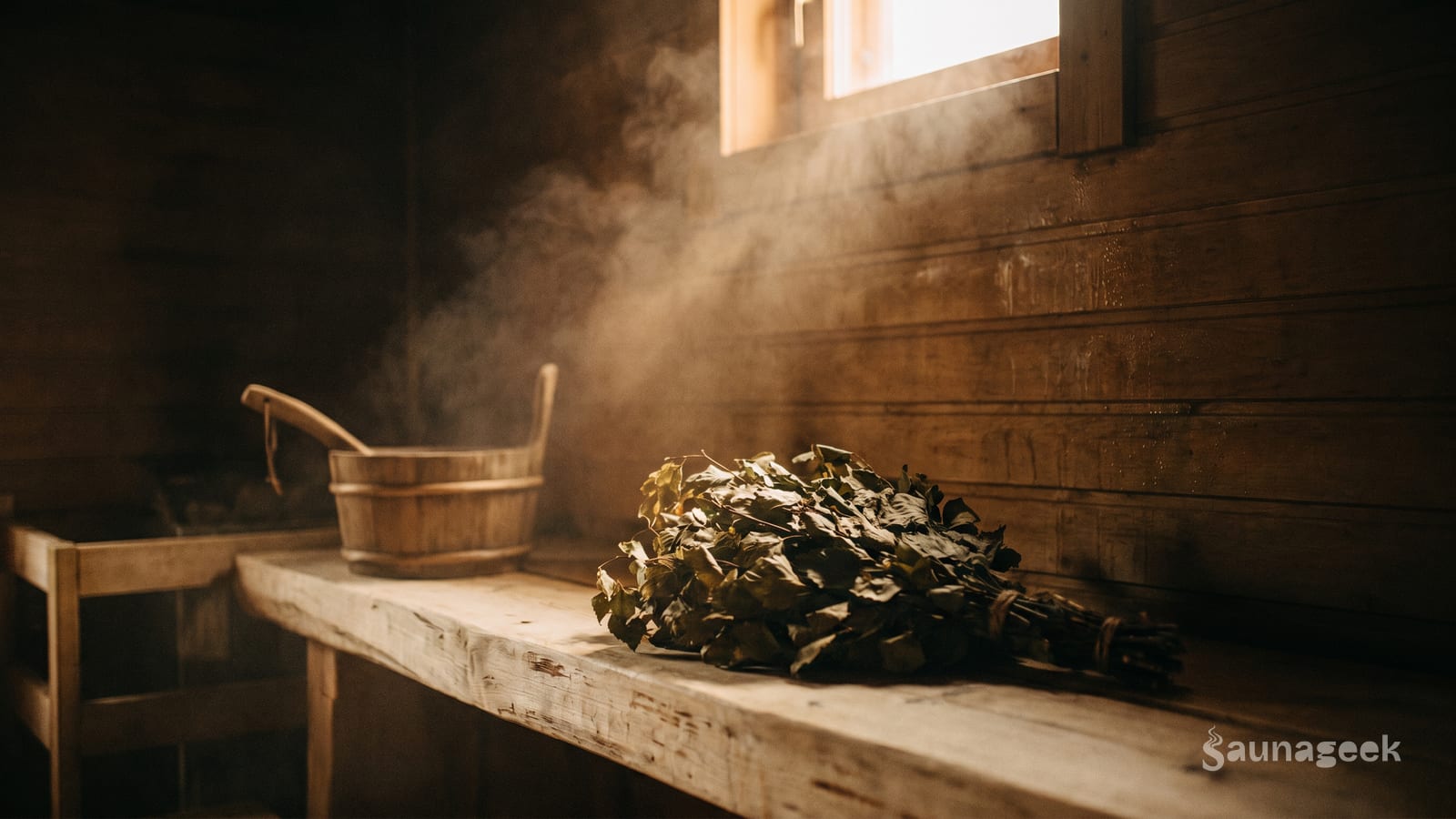
Every home sauna owner hits the same wall: the heater works fine, the bench is comfortable, but what other sauna accessories do you actually need? The internet answers with endless product lists. This guide answers with something more useful: opinions.
Here is what belongs in your sauna, what belongs on a shelf, and why the distinction matters.
The Essentials (Non-Negotiables)
These are the accessories that do actual work. If your sauna does not have them, fix that first.
Bucket and ladle. The bucket and ladle are how you create löyly. The steam is what makes a Finnish sauna feel alive. Without it, you have a hot room. With it, you have a sauna.
Get a wooden bucket (Nordic spruce, aspen, or alder are traditional). A stainless steel liner inside extends its life significantly. The ladle handle should be at least 40 to 45 cm (16 to 18 inches). Short handles end up with hot water dripping down your arm. Fill the bucket before your session starts and leave it near the heater where the water stays lukewarm rather than cold.
Thermometer and hygrometer. You cannot reliably gauge sauna temperature by feel. A thermometer tells you when the cabin is at the right temperature (typically 70 to 90°C / 158 to 194°F depending on preference). A hygrometer measures humidity, which affects how the heat feels.
An analog wood-and-glass model outperforms digital in one important way: no batteries, no EMF, and it survives decades of heat exposure. Mount it at head height on the wall opposite the heater. That is where the temperature gradient is most representative of what your body actually experiences.
Sauna stones. These are not decorative. They are the heat reservoir that makes löylylyönti (throwing water on the stones) work. Olivine diabase or peridotite are the materials you want. They are dense, heat-resistant, and long-lasting. Replace them every one to two years. Cracked, crumbled, or powdery stones do not hold heat well and can become a safety hazard.
Bench towels or bench covers. Sitting directly on bare wood is fine in a quick session. Over a 20-minute stay, you soak the bench with sweat and accelerate wood deterioration. A simple cotton or linen towel works. Some people prefer dedicated bench covers that stay in place. Either way: natural fibers, wash them regularly.
Sand timer or session timer. Ten to fifteen minutes per round is standard practice in Finnish saunas. The cheap $10 sand timer beats any phone app because your phone does not belong in the sauna room. It does not need charging, it does not need a screen, and it does not tempt you to check messages between rounds.
The Upgrades Worth Paying For
Once the essentials are covered, these accessories genuinely improve the experience.
Sauna whisk (vihta or vasta). Birch bundles have been part of Finnish sauna ritual for centuries. You soak the bundle in hot water, then gently lash your skin. It improves circulation, exfoliates, and distributes heat more evenly across your body. It is not a gimmick. It is a technique that survived hundreds of years for good reason.
Backrest and headrest. Aspen or alder, smoothly sanded. Long sessions (45 minutes or more) on a flat bench eventually strain your lower back or neck. A contoured backrest makes a real difference without adding complexity. These are simple wooden frames with no moving parts and no electronics.
Aromatherapy oils (sauna-grade only). Birch, eucalyptus, and pine are traditional. Here is the rule that most people miss: never apply undiluted oil directly to the stones. Three to five drops in a full ladle of water is all you need. Room-diffuser oils are not formulated for high-heat use. The compounds that make them smell good in a 22°C room behave differently at 80°C. If the label does not say “sauna grade,” skip it.
Cold plunge or ice bucket. This is where the experience shifts from pleasant to transformative. Hot-cold-hot rounds trigger contrast therapy: blood vessel constriction and dilation that improves circulation, reduces inflammation, and leaves you feeling genuinely alert. You do not need a plunge pool. A bucket of cold water at the right temperature (or an outdoor cold plunge if you are lucky enough to have one) does the job.
What to Skip
Infrared sauna hats. The claim is that they protect your head from infrared heat. If your cabin is properly heated, you do not need one. A well-designed infrared sauna runs at a controlled temperature that is not harmful to your scalp. The hat is unnecessary equipment.
Foam cushions. Foam does not belong in a high-heat environment. At sauna temperatures it off-gases, degrades, and becomes slick when wet. If you want cushioning on a bench, look for marine-grade vinyl over closed-cell foam. Or skip it entirely and use a towel folded to the thickness you want.
Non-sauna-grade plastics. Any accessory with cheap plastic components will warp, melt, or release unpleasant fumes at typical sauna temperatures (60°C+ / 140°F+). Wooden, stainless steel, or ceramic components are what you want. If the material feels cheap in your hand at room temperature, it will not survive the sauna room.
Decorative stones. Soapstone and ceramic decorative options look nice in catalogs. For actual heater stones, they underperform. Olivine diabase handles thermal stress far better. Decorative stones belong on a shelf, not in your heater.
Sauna Accessories by Sauna Type
Not every accessory belongs in every sauna.
Traditional Finnish dry sauna. Bucket and ladle are essential. Without löyly you are missing the core experience. Stones are necessary. A vihta fits naturally. Aromatherapy works. Cold plunge is a natural companion.
Infrared cabin. No löyly means no bucket and ladle. Infrared saunas do not use stones and do not benefit from traditional steam rituals. Your accessory priorities are thermometer (to monitor panel temperature), timer, bench covers, and optionally red light therapy panels if your cabin supports them. Everything else in this guide is irrelevant for an infrared setup.
Steam room. Different environment, different material requirements. Mold resistance matters. Teak and other dense hardwoods outperform softwoods. Steam rooms also require different cleaning approaches. Standing water and poor ventilation create different problems than a dry Finnish sauna.
Maintenance and Care
Accessories last longer with basic maintenance. This takes five minutes after a session.
Wipe down the bucket and ladle after each use. Do not leave standing water in the bucket between sessions. Standing water breeds bacteria and accelerates wood swelling and cracking. When the bucket does crack, sand the inside smooth and treat it with food-safe sauna oil.
Air dry wooden items completely before the next use. If your sauna has good ventilation, leaving the door open after a session handles this naturally. Store vihta/vasta bundles in a dry location. A damp bundle left in a closed sauna grows mold.
Replace sauna stones every one to two years, or sooner if you notice cracking, crumbling, or a powdery residue on the heater floor. When loading stones, place them loosely. Dense stacking restricts airflow and can damage the heater elements.
For cleaning, use a plant-based sauna cleaner. Bleach and harsh chemicals damage wood and metal, and their residues off-gas at high temperatures. A quick wipe-down after each session is usually enough to keep things clean between deeper cleans.
Frequently Asked Questions
Do I need a bucket and ladle if I have an infrared sauna? No. Infrared saunas do not produce steam and do not use stones. The bucket and ladle are specific to traditional Finnish saunas where creating löyly is the core ritual.
How often should I replace sauna stones? Every one to two years under normal use. If you notice cracking, crumbling, or the stones feel light (indicating internal voids), replace them sooner. Annual inspection at the start of your main sauna season is a good practice.
Can I use any essential oil in a sauna? Only oils specifically labeled as sauna-grade. Standard room-diffuser oils are not formulated for high-heat use. Use 3 to 5 drops in a full ladle of water. Never apply undiluted oil directly to stones.
What material should sauna accessories be made from? Wood (aspen, alder, Nordic spruce) for anything that gets handled or sat on. Stainless steel for bucket liners and hardware. Avoid plastics unless they are explicitly rated for high-temperature use. Glass and ceramic are fine for thermometers and decorative elements.
How do I stop my wooden bucket from cracking? Do not leave water sitting in it between sessions. Air dry it completely after each use. If a small crack appears, sand it smooth and apply a thin coat of food-safe sauna oil. Once the wood is thoroughly cracked, replace the bucket.
Is a sand timer better than a phone timer? For the sauna room itself, yes. Your phone does not belong in a hot, humid environment, and the temptation to check it defeats the purpose of a timed session. A $10 sand timer does not need charging, does not need an outlet, and does exactly what you need.