
Sauna Temperature – The Complete Guide
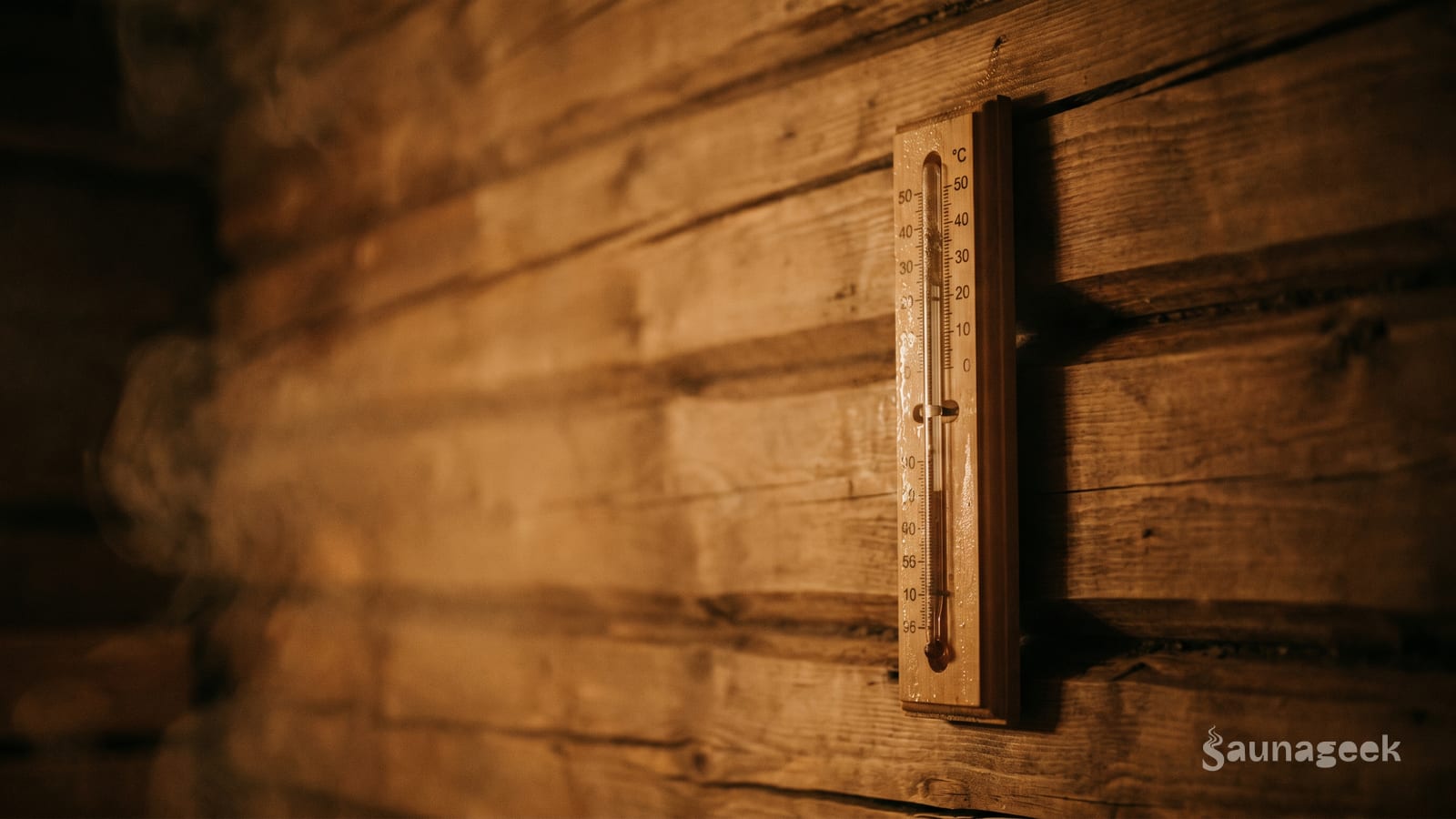
The short answer: there is no single sauna temperature. A traditional Finnish sauna runs 70–100°C (160–212°F). An infrared cabin sits at 40–55°C (104–131°F). A steam room wants 40–50°C (104–122°F) with near-100% humidity. Your ideal depends on your sauna type, experience level, and what you’re actually trying to get out of the session.
This guide covers all of it. Temperature ranges by type, the Rule of 200 and why it matters, where to start as a beginner, session length, safety basics, and the gear you actually need.
Sauna Temperature by Type
Different saunas run at radically different temperatures because they use different heat delivery methods. Matching your expectations to the right type matters more than chasing a specific number.
Traditional Finnish Sauna
The benchmark. Electrically heated or wood-fired, with water thrown on rocks to control humidity. Typical range: 80–100°C (176–212°F) for established commercial saunas. Home saunas often settle in at 70–85°C (158–185°F) because most people find higher temperatures unsustainable for regular use.
What separates Finnish sauna from other types is the löyly: the steam burst when water hits the rocks. That controlled humidity is part of why Finnish saunas can feel hotter than their dry counterparts at the same air temperature.
Infrared Sauna
Infrared heaters warm your body directly, not the air. This means lower ambient temperatures while still delivering deep heat to your skin and muscles. Most infrared saunas operate at 40–55°C (104–131°F) at the bench level.
Don’t let the lower numbers fool you. A 45°C infrared session can feel more intense than a 80°C Finnish session because the heat penetrates rather than just surrounding you. Start conservative.
Steam Room / Hamam
Turkish-style steam rooms target 40–50°C (104–122°F) with humidity approaching 100%. The humidity makes this temperature feel dramatically hotter than it reads on a thermometer. Your lungs and skin feel it differently than dry heat.
Traditional Finnish and steam room setups are basically opposite on the temperature-humidity curve. One runs hot and dry, the other cooler and saturated.
Dry Sauna vs. Wet Sauna
Both are Finnish-style at their core. The difference is humidity control:
- Dry sauna: Humidity under 20%, often much lower. You control the feel by choosing when to throw water on the stones. Typical: 80–100°C (176–212°F).
- Wet sauna: Humidity pushed to 20–40% by more frequent water throws. Feels hotter than the thermometer suggests. Same temperature range, different experience.
Neither is objectively better. Dry gives you more control. Wet gives you a heavier, more enveloping heat.
The Rule of 200: What It Means and How to Use It
The Rule of 200 is the practical formula that ties temperature and humidity together for traditional saunas:
Temperature (°F) + Relative Humidity (%) = 200
A session hitting that number delivers the classic Finnish sauna löyly experience. It is intense but breathable heat that feels balanced rather than punishing.
Here are three worked examples:
| Air Temp (°F) | Humidity (%) | Sum | Feel |
|---|---|---|---|
| 160 | 40 | 200 | Classic Finnish sweet spot |
| 180 | 20 | 200 | Hotter but drier: more intense |
| 140 | 60 | 200 | Lower temp but high humidity: heavy, thick air |
At 180°F with 20% humidity, the air feels dry and radiant. At 160°F with 40% humidity, it feels more enveloping and humid. Same Rule of 200 score, completely different sessions.
The Rule of 200 does not apply to infrared saunas. Infrared has no meaningful ambient humidity to factor in. The heat comes from light wavelengths, not steam. Trying to apply the formula to an infrared session is comparing two different physical processes.
Sauna Temperature for Beginners
Start lower than you think. Not because you can’t handle more, but because tolerance builds over sessions. There is no prize for overheating on day one.
Traditional Finnish sauna: Begin at 65–70°C (150–158°F). If your home sauna runs hotter, use shorter initial sets (5–8 minutes) and build from there. Many regular users never go above 80°C.
Infrared sauna: Begin at 38–43°C (100–109°F). Infrared penetration makes this feel more substantial than it sounds. If it feels too intense immediately, drop to 37°C and work up over several sessions.
What to expect in your first session:
- Sweating starts within 3–5 minutes. That is normal, not a sign something is wrong.
- Your heart rate rises as your body works to cool you down
- The top bench is noticeably hotter due to heat stratification. Stay on the lower bench until you know your tolerance.
- Dizziness or nausea means exit immediately, no discussion
Build tolerance gradually. Add 5°C or 10 minutes per session across weeks, not days. A sauna is a long-game practice, not a one-time achievement test.
How Long to Stay in a Sauna
Traditional Finnish sauna sessions typically cap at 15–20 minutes for most experienced users. Going longer offers diminishing returns and raises exhaustion risk.
Infrared allows longer sessions. 25–40 minutes at lower temperatures is common because the heat is more targeted and the ambient air stays cooler.
General guidelines by experience level:
| Level | Traditional | Infrared |
|---|---|---|
| First session | 5–8 min, 1–2 rounds | 15–20 min |
| Building tolerance | 10–15 min, 2–3 rounds | 20–30 min |
| Regular practice | 15–20 min, 3–4 rounds | 30–40 min |
Cool-down breaks between rounds are part of the practice. Step out, let your body temperature normalize, hydrate, then go back in. Finnish sauna culture calls this kiertää: circulating. It matters.
Essential Equipment for Temperature Control
You don’t need much, but what you need matters.
Sauna thermometer: Non-negotiable for any serious setup. Analog bimetal dial thermometers are reliable and cheap. Digital options with probe sensors give more accurate bench-level readings. Know your actual temperature. Guessing is how people get surprised.
Hygrometer (for traditional/wet saunas): Measures relative humidity. Not essential for dry saunas but useful if you’re running a wet setup and want to dial in the Rule of 200 precisely. Many combo thermometer-hygrometer units exist for under $30.
Timer: Use your phone or a dedicated sauna timer. Sessions creep longer than intended when you’re relaxing. Set a conservative limit and stick to it.
Sauna rocks: If you’re running a wood-fired or electric stone heater, rock quality affects heat retention and steam output. River rocks or gabbro are traditional. Replace cracked or spalling rocks annually.
Skip the gimmicks: infrared hats, special sauna cushions, aroma dispensers marketed as essential. The basics above are what actually matter.
Sauna Safety and Precautions
Saunas are safe for most healthy adults when used sensibly. A few hard rules:
Hydrate before, during, and after. You will lose water weight through sweat. Replenish with plain water or an electrolyte drink. Alcohol is a genuine risk factor. It dilates blood vessels and compounds the cardiovascular stress of heat exposure. Skip the sauna after more than a drink or two.
Know the exit signals. These mean stop and get out now:
- Dizziness or lightheadedness that doesn’t resolve within 30 seconds of sitting up
- Nausea
- Tightness in your chest
- Fluttering heartbeat or palpitations
- Tunnel vision
Consult a doctor first if you have: uncontrolled high blood pressure, heart conditions, epilepsy, are pregnant, or are on medications that affect thermoregulation (some beta-blockers, diuretics, antipsychotics). Sauna use is generally safe but your doctor knows your specific situation.
Pre- and post-sauna checklist:
- Drink 200–300ml of water 20 minutes before your session
- Shower clean before entering. Sauna is a clean space.
- Remove metallic objects (watches, jewelry). They conduct heat.
- Exit immediately if you feel unwell, no exceptions
- Rehydrate with at least 300–500ml after
- Let your body temperature normalize before eating a heavy meal or exercising
Frequently Asked Questions
Can a sauna be too hot?
Yes. Above roughly 110°C (230°F) in a traditional setup, the air becomes difficult to breathe comfortably and the risk of burns from contact surfaces rises. Most home setups don’t reach this, but commercial saunas can. If the air feels painful to breathe, it’s too hot.
What temperature kills bacteria in a sauna?
Saunas aren’t sterilization chambers. Bacteria on skin surfaces are reduced at temperatures above 60°C (140°F) with sufficient exposure time, but a typical session isn’t designed to sanitize anything. That’s not the point of sauna use.
Do saunas have to be above a certain temperature to work?
For traditional saunas, meaningful heat stress starts around 60°C (140°F). Below that, you’re mostly just sitting in a warm room. Infrared delivers heat stress at lower ambient temperatures because of how it penetrates tissue. The temperature floor depends on the sauna type.
Why do Finnish saunas run hotter than infrared?
Two different heating mechanisms. Finnish sauna heats the air, which then heats you through convection and radiation. You need high air temperatures to drive meaningful heat transfer. Infrared heats your body directly through electromagnetic radiation, so lower ambient temperatures still produce the desired physiological effect.
Is 80°C (175°F) too hot for a sauna?
For most experienced users, no. It is on the hotter end of normal for Finnish sauna. For beginners, yes, start lower. If you are building a home sauna, 80°C is a reasonable upper bound for regular use. Going hotter is possible but adds intensity without proportional benefit.
How long should you stay in a sauna at 80°C?
If you’re experienced and running 80°C, 10–15 minutes per round is typical, with 2–4 rounds total including cool-down breaks. At that temperature, going much beyond 20 minutes without a break puts you in diminishing-returns territory.
What is the average sauna temperature in Finland?
Commercial sauna facilities in Finland typically run 80–100°C (176–212°F). The famous Sauna from Savo, a championship sauna competition, once reached over 110°C (230°F). But that is competition, not regular use. Most Finnish home saunas settle around 70–85°C (158–185°F) because daily use at competition temperatures is not sustainable.