
Sauna Essential Oils – How to Use Them Safely and Effectively
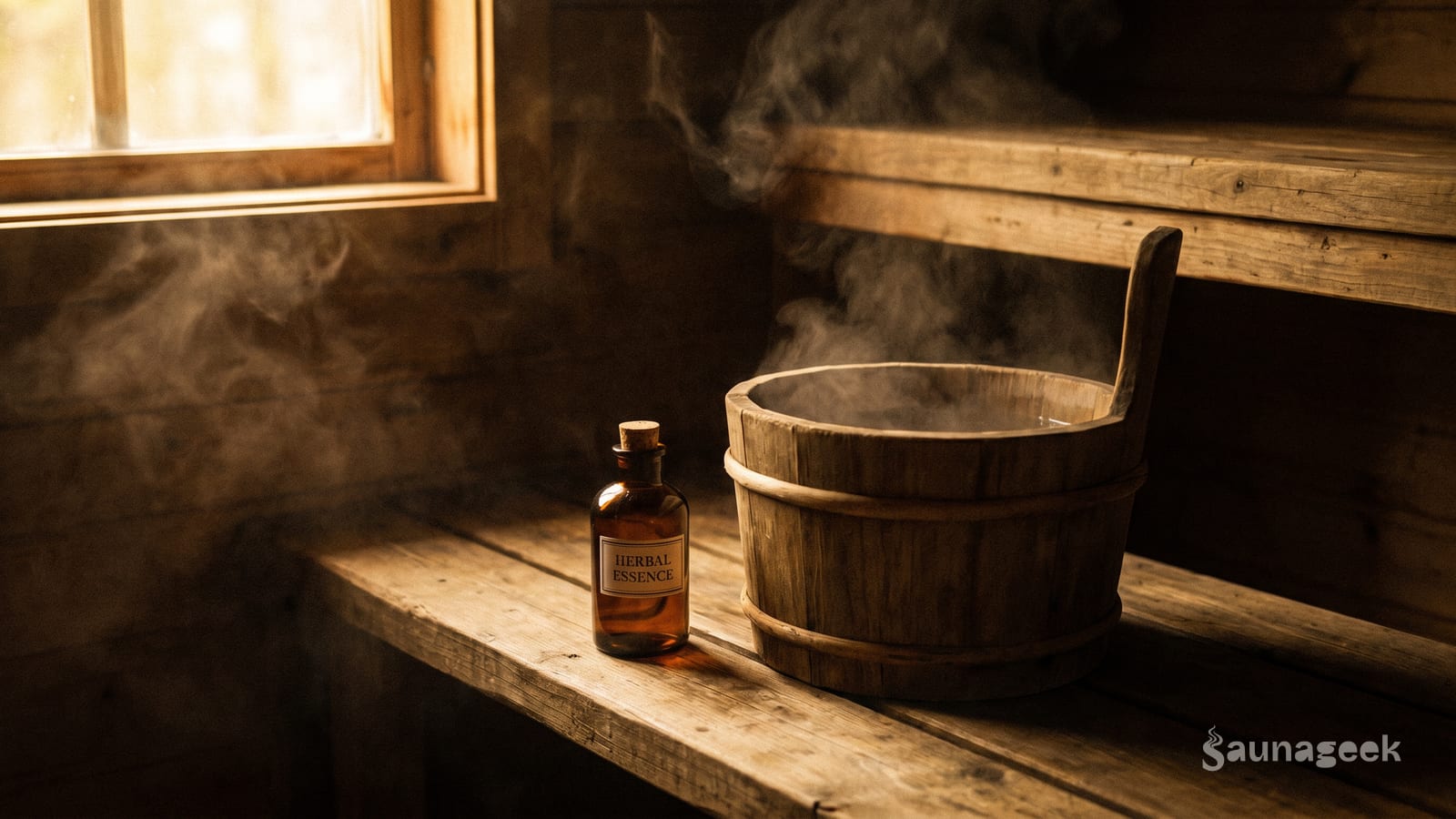
You can use sauna essential oils, yes. But the way most people do it is wrong, and the way most articles describe it is incomplete. The safety warnings are usually there, but the practical guidance on dilution, technique, and what actually works in a traditional Finnish setup gets lost. Let us fix both.
What Are Sauna Essential Oils?
Essential oils are highly concentrated plant extracts. In sauna, they create aromatic and therapeutic effects through inhalation, with volatile compounds evaporating quickly in the heat and entering the olfactory pathway to the limbic system. The experience is more immediate than at room temperature because heat accelerates diffusion.
In Finland, this is not a trend. Finns have added birch, eucalyptus, and tar scents to löyly for generations. The scent of löyly is part of the ritual, not an afterthought. You do not need to be Finnish to appreciate it, and you do not need to treat it as a sacred tradition either. It is a good practice that happens to have deep roots.
How Sauna Heat Changes Aromatherapy
Sauna temperatures are not like diffuser temperatures. At 80 to 100 degrees Celsius (176 to 212 Fahrenheit), volatile compounds evaporate fast and scents become significantly more potent. What smells mild at room temperature can become overwhelming in a hot sauna. This is why dosing matters more in a sauna context than anywhere else in aromatherapy.
The olfactory pathway delivers compounds directly to the limbic system, which handles mood, memory, and stress response. This is the real mechanism behind any subjective benefit. You are not absorbing therapeutic quantities through your skin. You are smelling things, and that is enough to matter.
The Best Essential Oils for Sauna
Eucalyptus. The classic sauna oil. It supports respiratory function and has a clarifying, decongestant effect. If you only keep one oil, this is the one.
Peppermint. Mental clarity and energy. The menthol creates a cooling sensation that contrasts well with high heat. Good for morning sessions or when you need to feel alert.
Lavender. Relaxation and sleep support. Best used in evening sessions when the goal is wind-down rather than activation. Some users report it helps with anxiety after a long day.
Pine needle. Traditional Finnish choice. Forest scent, grounding and resinous. If you want something that fits the cultural context of the sauna experience, this is it.
Tea tree. Antimicrobial properties make it a good fit for cold and flu season. It has a sharper, more medicinal character than eucalyptus.
Citrus (lemon, sweet orange). Mood lift and social-session energy. Bright scents work well when the sauna is a gathering space rather than a solo recovery ritual.
Keep doses modest. You can always add more; you cannot take it back once it is in the air.
Essential Oils to Avoid in a Sauna
Here is what most articles skip. Some essential oils are naturally heating compounds, which is useful in a massage context but counterproductive in a sauna where you are already generating significant heat stress.
Avoid these in sauna heat: ginger, black pepper, oregano, marjoram. They are heating oils and they fight the sauna’s own effect rather than complementing it. This does not mean they are bad oils. They are excellent for topical use or diffusing at room temperature. Just not in a hot sauna.
How to Use Essential Oils – Step by Step
Traditional Finnish sauna (stone heater)
- Add drops to your sauna bucket filled with water. Dose by sauna size: small (4 to 6 square meters) uses 3 to 4 drops; medium (6 to 8 square meters) uses 5 to 6 drops; large (8 to 10 square meters) uses 7 to 10 drops.
- Stir to distribute. The oil will not dissolve fully in water. That is fine.
- Ladle a modest amount over the stones early in your session.
- Add more ladles only if the scent fades. Less is more. You can always refresh; overdoing it early makes the rest of the session unpleasant.
- Never pour undiluted oil directly on stones. It can produce toxic smoke and, in some setups, is a fire hazard. Dilution is not optional.
Infrared sauna
Never apply drops to heater elements. Most infrared heaters operate differently and applying oil directly is a fire hazard.
Use a heat-safe ceramic bowl or cedar oil tray placed away from direct heat. Place it on a bench or shelf where it receives ambient warmth but no direct radiation. One to three drops per session is sufficient. Start low.
Alternative: use a sauna spray (recipe below).
Sauna Spray Recipe
The option most people overlook and should use more.
Mix 1 part vodka or witch hazel with 3 parts distilled water. Add 10 to 15 drops of essential oil per 100 milliliters of total mixture. Shake before each use. Mist into the air or onto a hand towel and wave it gently. This gives you more control over intensity than pouring on stones and works in both traditional and infrared saunas.
Choosing Quality Oils
The market has a lot of fragrance oils labeled as essential oils. Here is how to tell the difference.
Look for 100% pure essential oil on the label. Not fragrance oil, not perfume oil, not aromatic blend. The botanical name should be listed.
Dark amber or cobalt glass bottles. Essential oils react with plastic and react with clear glass under light. If you see an oil in a clear bottle on a store shelf, walk away.
GC-MS test results available. This is gas chromatography-mass spectrometry testing that confirms the oil contains what it claims. Reputable brands publish these. If you cannot find them, ask why not.
Price is a signal. Extremely cheap oils are usually synthetic. Essential oils are not expensive to produce but they are not cheap either. A 15-milliliter bottle of real eucalyptus oil typically costs more than a few dollars.
Avoid anything with a proprietary blend label and no botanical name. You do not know what is in it.
Safety Tips
Dilute in water before pouring on stones. Always.
Start with 1 to 2 drops and increase only if needed. The heat amplifies everything. What seems mild at room temperature can be overwhelming at 80 degrees.
Avoid skin contact with undiluted oils. Your pores are open in the sauna, which increases absorption and irritation risk.
Consult a doctor if you are pregnant, asthmatic, or have respiratory conditions. Essential oils in enclosed hot spaces are not appropriate for everyone in these situations.
Store oils in a cool, dry place. Keep the bottles out of the sauna. Heat degrades them.
Ventilate after your session. Open the door or window to clear residual aromatics before drying off and cooling down. This protects the wood over time and keeps the space comfortable for the next person.
FAQ
Can I use any essential oil in my sauna?
No. Pure essential oils only. Avoid heating oils (ginger, black pepper, oregano, marjoram) in hot sauna conditions. Anything labeled fragrance oil or perfume oil is not appropriate.
How many drops per session?
Traditional Finnish sauna: 3 to 6 drops in your water bucket, diluted before ladling. Infrared sauna: 1 to 3 drops via heat-safe bowl or spray.
Will oils damage my sauna wood or stones?
Not if diluted properly in water. Undiluted oil applied repeatedly to stones can leave residue that transfers to wood over time. Proper dilution avoids this.
Can I use a regular diffuser?
No. Most electric diffusers are not rated for sauna temperatures and most are not designed for the humidity levels in a traditional sauna. Use a ceramic bowl with ambient heat or the spray method instead.
What is the difference between essential oils and sauna fragrances?
Essential oils are pure plant extracts. Sauna fragrance products may contain synthetic chemicals, diluents, or carrier agents that are not always disclosed. If you want the genuine article, start with a quality essential oil and dilute it yourself. You control what goes into the air.
What is the Finnish tradition of sauna scents?
Löyly has always carried scent in Finnish sauna culture. Aromatic woods, birch leaves, tar, and later eucalyptus have been part of the experience for generations. The scent of löyly is inseparable from the ritual. This is not a rule you must follow. It is context that makes the practice richer if you choose to engage with it.