
Best Sauna Stones – What to Know Before You Buy
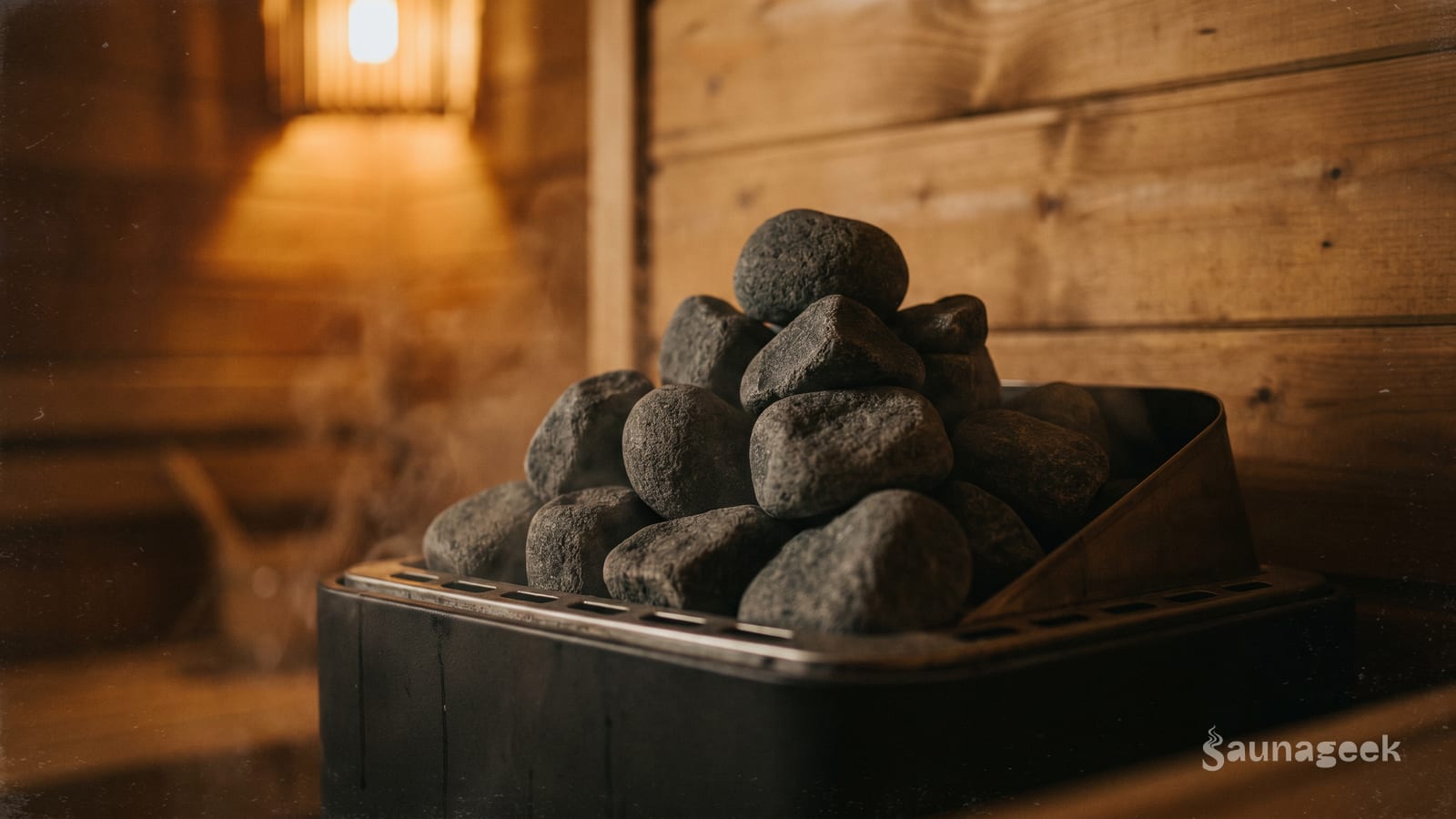
What Are Sauna Stones and Why Do They Matter?
Sauna stones are the engine of every sauna. They store the heat your heater produces and release it as löyly when you pour water. Get them right and your sauna performs the way it should. Get them wrong and you’ll deal with weak steam, cracked stones, or damage to the heater itself.
This guide covers stone types, sizing, how to arrange them, and maintenance. By the end you’ll know exactly what to buy and why.
Stone Types Compared
Not all stones handle heat the same way. The wrong type can crack fast, release harmful minerals, or just fail to hold enough heat for decent steam.
Olivine diabase fills the standard role well. Dense, heat-resistant, holds thermal energy reliably. Most commercial sauna stones are olivine diabase or a similar mafic rock. Not sure what to buy? Make this your default.
Black volcanic rock (often peridotite or similar) takes heat in quickly and tolerates thermal stress without complaint. Some sauna enthusiasts prefer it for wood-burning stoves, where the higher temperatures push regular stones harder.
Rounded river stones look appealing but come with a catch. Their smooth surfaces don’t interlock, so air circulates freely around them. That sounds good in theory, but it also means heat transfer is less efficient. Rounded stones work fine if that’s what you have; just don’t pay a premium for them.
Angular stones stack better and create more consistent heat distribution. They nest together, which reduces air gaps and improves how evenly the heater performs.
Heat-treated stones have been fired at around 1,000°C to drive out moisture and internal stresses. They last significantly longer than untreated stones, especially in electric heaters that run frequently. The trade-off is cost. For occasional home use, untreated olivine diabase is fine. For daily use or commercial saunas, heat-treated is worth the investment.
Decorative cover stones are the ones you’ll see on some heater lids. They look nice. They do nothing for performance. Skip them unless you like the aesthetic.
The short recommendation: olivine diabase, heat-treated if you use your sauna more than a few times per week.
Stone Size - What Fits Your Heater?
Size matters because it affects airflow and heat contact with the heating elements or combustion chamber.
Electric sauna heaters typically use stones sized 5-10 cm (2-4 in). The sweet spot is usually 8-10 cm for larger residential heaters, 5-7 cm for compact or wall-mounted units. Check your heater manual for the manufacturer’s recommendation.
Wood-burning sauna stoves generally need larger stones: 10-15 cm (4-6 in) on the base layer, with smaller 5-8 cm stones on top. The larger base stones sit closer to the fire and need the thermal mass to handle it.
Compact or low-profile heaters have less rock storage by design. Use the smaller end of the range to avoid overfilling, which restricts airflow and causes overheating.
A rule that applies across all heater types: stones should be packed loosely, not forced in tight. Air circulation matters. If you have to force a stone into place, it’s the wrong size.
How to Arrange Sauna Stones the Right Way
Arrangement affects both heater longevity and steam quality. Do it wrong and you’ll notice weaker löyly even with good stones.
Base layer first. Place the largest, heaviest stones at the bottom. These absorb the most direct heat and anchor the structure.
Smaller stones on top. The top layer heats fastest and produces the steam you actually feel. Smaller stones here heat more uniformly and release steam more readily.
Flat stones go vertical. If you’re using angular or slab-style stones, orient them vertically rather than flat. This opens channels for hot air to rise through the stack. Flat-stacked stones create dead zones where heat builds up unevenly.
Loose stacking throughout. Don’t pack stones tight. Leave visible gaps. Restricted airflow makes the heater work harder, shortens element life in electric units, and produces lackluster steam.
For electric heaters specifically: keep stones clear of the heating elements themselves. Elements need contact with air to regulate temperature. A stone wedged between elements can cause hot spots and faster burnout. Some heaters have a designated element protection plate or zone - respect it.
Getting the Most Out of Your Stones - Löyly Technique
Löyly is the steam cloud that rises when water hits hot stones. The stones matter. So does what you do with them.
Use room-temperature water. Not cold. Not hot. Room temperature. Cold water hits the stones with thermal shock, which contributes to cracking over time. It also produces a harsher, more aggressive steam compared to water that’s had a few minutes to sit at ambient temperature.
Pour slowly. A rapid pour dumps all the water at once, most of it running off the stones without fully vaporizing. A slow pour gives each addition of water time to convert to steam. This produces a fuller, more consistent löyly that lingers.
Small amounts at a time. More water isn’t more steam if the stones can’t absorb the heat fast enough. Start with a modest amount, gauge the result, and add more if you want a heavier steam.
Avoid excessive water. Drowning the stones reduces their surface temperature below the point where proper steam forms. You’ll get dripping, not löyly.
This is the section most competitors skip entirely, but it’s what separates a genuinely good sauna session from one that feels underwhelming even with quality stones.
When to Replace Sauna Stones
Stones don’t last forever, even good ones.
How to test: pick up two stones and tap them together gently. A hollow sound means internal cracking - replace those. A dull, solid clink means they’re still intact.
Visual signs: visible cracks, flaking surfaces, stones that have turned grey or chalky. Grey discoloration often indicates the stone is spent and losing thermal mass.
Typical lifespan: 1-3 years for home use, depending on frequency and how well you maintain them. Public or commercial saunas may need annual replacement because of heavy daily use.
What shortens stone life: frequent heavy pouring, consistently using cold water, overfilling the heater (which restricts airflow and causes uneven heating), and stacking stones too tightly from the start.
A stone that cracks isn’t just a performance problem. Fragments can damage heating elements or fall into the combustion chamber of wood stoves. Replace worn stones promptly.
Common Mistakes to Avoid
Using river rocks or generic stones. Don’t. River rocks often contain minerals like asbestos or silica that become hazardous when heated repeatedly. They’re also prone to cracking. Buy purpose-made sauna stones.
Overfilling the heater. More stones does not mean more heat. Overfilling restricts airflow, causes overheating, and produces weaker steam. Follow the heater manufacturer’s stone capacity guidance.
Pouring cold water. Thermal shock accelerates cracking and produces harsh, short-lived steam. Room-temperature water is the simple fix.
Ignoring stone dust and debris. New stones often shed dust and small particles from manufacturing and transport. Rinse them thoroughly before the first use. Dirty stones can emit odors and carry contaminants into the air.
Skipping the rinse before first use. Even stones marketed as clean can have dust, debris, or residue from processing. A quick rinse takes 30 seconds and prevents an unpleasant first session.
FAQ
What are the best stones for a sauna heater? Olivine diabase is the best all-around choice for most heaters. Black volcanic rock is a close second, particularly for wood-burning stoves. Both handle thermal stress well and store heat effectively.
How often should you replace sauna stones? Replace every 1-3 years for typical home use. Commercial saunas with daily sessions should replace annually or more frequently.
Can you use regular rocks in a sauna? No. Regular rocks, especially river rocks, can contain hazardous minerals like asbestos and are prone to cracking under sustained heat. Use stones specifically sold for sauna use.
What happens if sauna stones crack? Cracked stones hold less heat and produce weaker steam. In electric heaters, fragments can damage heating elements. Replace cracked stones promptly.
Do sauna stones need to be cleaned? Yes. Rinse new stones before first use. Inspect and clean existing stones annually to remove dust and debris that accumulates over time.
What is löyly? Löyly is the Finnish word for the burst of steam that rises when you pour water onto hot sauna stones. It’s also used to describe the overall steam atmosphere of a sauna. The technique matters: water temperature, amount, and pouring speed all affect the quality of the löyly you get.
Heat-treated vs. untreated sauna stones - what’s the difference? Heat-treated stones have been fired at approximately 1,000°C to remove moisture and internal stresses before sale. This makes them more durable and resistant to cracking under repeated heating cycles. Untreated stones are less expensive but wear faster, especially with heavy use. For occasional home sauna use, untreated stones are fine. For daily use, heat-treated is the better investment.
Stones are a minor expense relative to the heater itself, but they make a major difference in how your sauna performs. Buy the right type, size them for your heater, arrange them loosely, and maintain them by checking once a year. The steam quality will reflect the care you put in.