
Best Sauna Cleaner
What Is the Best Sauna Cleaner?
“Best sauna cleaner” is a broader question than it sounds. The right answer depends on whether you have a traditional Finnish sauna with steam or an infrared cabin, whether your benches are raw cedar or finished wood, and how often you actually use the thing. This guide covers both DIY and commercial options, names specific products, and gives you a cleaning system that actually works.
On sauna hygiene: regular cleaning is one part of the equation, but prevention habits matter just as much. Knowing how to clean sauna benches correctly and maintaining basic hygiene practices will reduce how much effort each deep clean requires.
Why Sauna Cleaning Gets Overlooked (And Why It Matters)
Most people do not think about cleaning their sauna until something smells wrong. By that point, the damage is already done.
Sweat is mildly acidic. When it absorbs into wood benches session after session, it breaks down the wood fibers over time and creates the exact conditions that bacteria and mold find hospitable. The warm, occasionally moist environment inside a traditional sauna is not extreme, but it is persistent. Good sauna maintenance means tackling this before it builds up. Unlike a shower you can bleach, a sauna needs to be cleaned with products that will not release toxic fumes when heated.
The cost contrast is worth considering: a proper deep clean takes 30 to 45 minutes and costs almost nothing. Replacing warped benches or resanding a heavily stained interior runs into hundreds of dollars and significant downtime. Prevention beats remediation by a wide margin.
Products to Avoid and Why
Some cleaning chemistry that works fine elsewhere is genuinely dangerous in a sauna.
Bleach and chlorine-based cleaners release toxic fumes when heated. Never use them. This is not a preference; it is a safety issue.
Ammonia and harsh detergents create the same problem and strip natural oils from the wood, making it more absorbent.
Undiluted pine oil leaves a residue that becomes gummy when heated and can stain light-colored woods.
Pressure washers will saturate sauna wood beyond any practical drying window. The water gets into the grain and the wood warps. Outdoor saunas get rained on; that is different from deliberately flooding the interior.
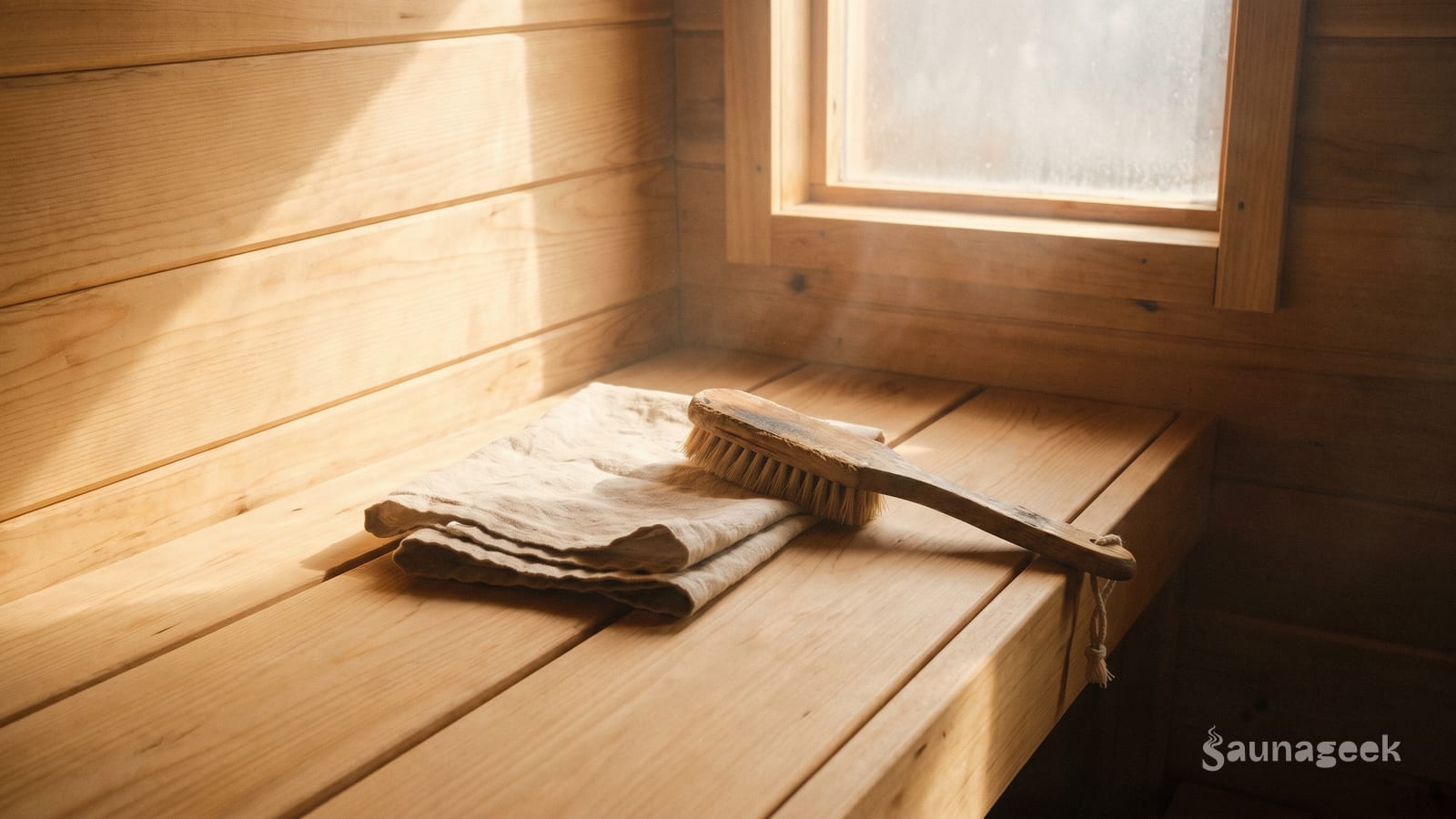
Abrasive scrubbers and steel wool scratch the wood surface, making it rougher and more absorbent. Use a soft brush instead.
The Best Sauna Cleaners - Our Top Picks
Here are the products worth recommending, with honest reasoning for each. If you prefer a natural sauna cleaner, the DIY options below hold up well against commercial products.
Sauna Seal Sauna Cleaner is a plant-based, pH-neutral formula designed specifically for sauna wood. It cleans without stripping natural oils, making it safe for raw cedar, spruce, and basswood. Best for regular weekly maintenance. You spray it on, scrub gently, and wipe dry. Simple, and it works.
Euca Eco Detergent is a eucalyptus-scented ecological concentrate with biodegradable surfactants. The concentrate format means a little goes a long way, and the formulation handles body oils and sweat buildup effectively. Worth using for monthly deep cleans. Available through sauna specialty retailers in most markets.
Supi Sauna Clean (Tikkurila) is the most widely available purpose-built sauna cleaner in Finland, which means it has been tested in exactly the conditions that matter. It works well on both benches and wall panels, handles mild mold issues, and rinses cleanly. If you are in Europe, this is the default commercial choice. In North America it requires ordering from a specialty supplier.
DIY diluted white vinegar (1 part vinegar to 3 parts warm water) handles light cleaning, limescale buildup on sauna stones, and general surface wipe-downs at essentially no cost. Vinegar is mildly acidic, which cuts through soap residue and body oils. It smells strong during application but dissipates completely when the sauna is heated. Best budget option by a wide margin.
A note on essential oils: tea tree oil has legitimate antimicrobial properties and can be added to DIY cleaning solutions (a few drops per spray bottle). Never apply undiluted essential oils directly to wood.
How to Clean a Sauna - Step by Step
This is the practical section. Follow it in order.
Gather supplies first. You need a soft brush, two microfiber cloths, a bucket, your cleaner of choice, and clean towels for drying. Doing this before you start means you are not stopping halfway through to find a tool.
Remove loose debris. Vacuum or brush from top to bottom. Start with the ceiling, then walls, then benches, then floor.
Apply cleaner, benches first. Benches take the most abuse and need the most attention. Spray or wipe on your chosen cleaner and scrub gently along the wood grain. Never across the grain.
Clean walls next. Walls accumulate less direct contamination but still need attention, especially above the heater. Wipe down with a damp cloth rather than saturating the wood.
Clean the floor. Sweep, then mop with your cleaning solution or mild soap and water. If you have a drain, rinse and let it flow out. If not, wring out your mop thoroughly or use a wet vac.
Rinse bench surfaces with cold or warm water if using a stronger cleaner. Plain vinegar solution does not need rinsing if diluted correctly.
Dry immediately. This step is critical. Use clean towels and dry all bench surfaces thoroughly. Wet wood is where mold gets started.
Ventilate. Leave the door open or run the heater on low heat (50 to 60C / 122-140F) for 15 to 20 minutes to drive out residual moisture.
Return benches and store accessories. If you removed benches for deep cleaning, put them back and let the sauna air out fully before closing up.
Cleaning by Sauna Type
Traditional Finnish sauna (wood-burning or electric). These generate the most moisture, especially when water is thrown on the stones. Bench hygiene is the priority: wipe benches after every session and deep clean weekly during heavy use. Treat benches with paraffin oil once or twice per year. Clean sauna stones monthly by rinsing with water and checking for cracks or crumbling stones that need replacing.
Infrared cabin sauna. The dry heat means less moisture-related risk, but sweat still accumulates on benches and surfaces. Wipe benches with a damp cloth after each use. Do not saturate wood around heater panels. Deep clean monthly with the same approach as traditional saunas, but with more attention to wiping and less concern about moisture damage.
Outdoor barrel sauna. Exposure to weather and seasonal temperature swings creates different challenges. Clean the floor and any drain more frequently. Check behind and below benches seasonally for mold or moisture buildup, especially in humid climates. In cold seasons, make sure the interior is thoroughly dry before closing up.
How Often Should You Clean a Sauna?
| When | What |
|---|---|
| After every use | Wipe benches dry, ventilate, remove damp towels |
| Weekly (3+ sessions) | Vacuum and surface wipe with cleaner |
| Monthly | Deep clean benches and walls, clean sauna stones, check wood condition |
| Annually | Sand and treat benches with paraffin oil, full interior inspection |
If you use the sauna four or more times per week, move the weekly tasks to twice weekly and the monthly tasks to every two weeks.
Prevention Is Better Than Cure
The cleaning routine matters, but prevention makes cleaning dramatically easier. Think of it as part of your overall sauna wood care practice.
Shower before entering. This is the single most effective step. Remove sweat, body products, and lotions before you sit on the benches. It is also standard practice in Finnish sauna culture for reasons that are exactly this practical.
Always use towels on benches. Lay a towel on the bench before sitting. Some sauna users bring a dedicated sauna towel; others use any clean towel. The point is that the towel absorbs your sweat, not the wood. Replace with a dry towel partway through a long session.
Ventilate between sessions. Leave the sauna door open and, if available, the vent. Ten to fifteen minutes of air exchange removes most of the moisture from the previous session.
Run the heater on low after closing. 50 to 60C (122-140F) for 15 to 20 minutes after the last session drives residual moisture out of the wood and benches.
Baking soda between uses. Place a small open bowl of baking soda inside the sauna. It absorbs odor and mild moisture without affecting the wood. Replace monthly.
FAQ
Can I use regular bathroom cleaner in my sauna? No. Bathroom cleaners typically contain chlorine bleach or harsh detergents. When heated, chlorine releases toxic fumes. Harsh detergents strip natural oils from sauna wood, making it more porous and prone to staining. Use a purpose-built sauna cleaner, a mild vinegar solution, or at minimum a pH-neutral ecological cleaner.
How do I remove sweat stains from sauna benches?
Make a paste of baking soda and warm water. Apply it to the stain, scrub gently along the wood grain, rinse with a damp cloth, and dry immediately. For stubborn stains on raw wood, light sanding (220 grit or higher) can work, but test on an inconspicuous area first and apply a fresh coat of paraffin oil afterward.
Can I use tea tree oil to clean my sauna?
You can add a few drops of tea tree oil to a DIY cleaning solution for its antimicrobial properties. Never apply undiluted essential oils directly to sauna wood. Undiluted, they leave a sticky residue that becomes unpleasant when heated.
How do I clean sauna stones?
Rinse sauna stones with water monthly. Over time, they accumulate calcium deposits and stone dust. A thorough rinse is usually sufficient. If stones are heavily sooted, scrub with a stiff brush and water. Do not use soap or detergent on stones. Replace stones that are cracked or crumbling; degraded stones can explode when heated.
Should I use a shop vac to clean my sauna floor?
Yes, for the dry debris stage. Vacuum the floor before mopping or wet cleaning. For the wet cleaning step, wring out your mop thoroughly or use a wet vac to extract water rather than flooding the floor.
Final Thoughts
Sauna cleaning is not glamorous, but it is the difference between a sauna that lasts 15 years and one that needs bench replacement in 8. The routine is simple: wipe after every use, ventilate, deep clean monthly, treat with paraffin oil annually.
The products that matter are pH-neutral, plant-based cleaners or a simple vinegar solution. Your sauna does not need to smell like a hospital. It needs to be dry, clean, and made of wood that has not been stripped of its natural defenses.
Keep it simple and do it consistently.