
Best Infrared Sauna
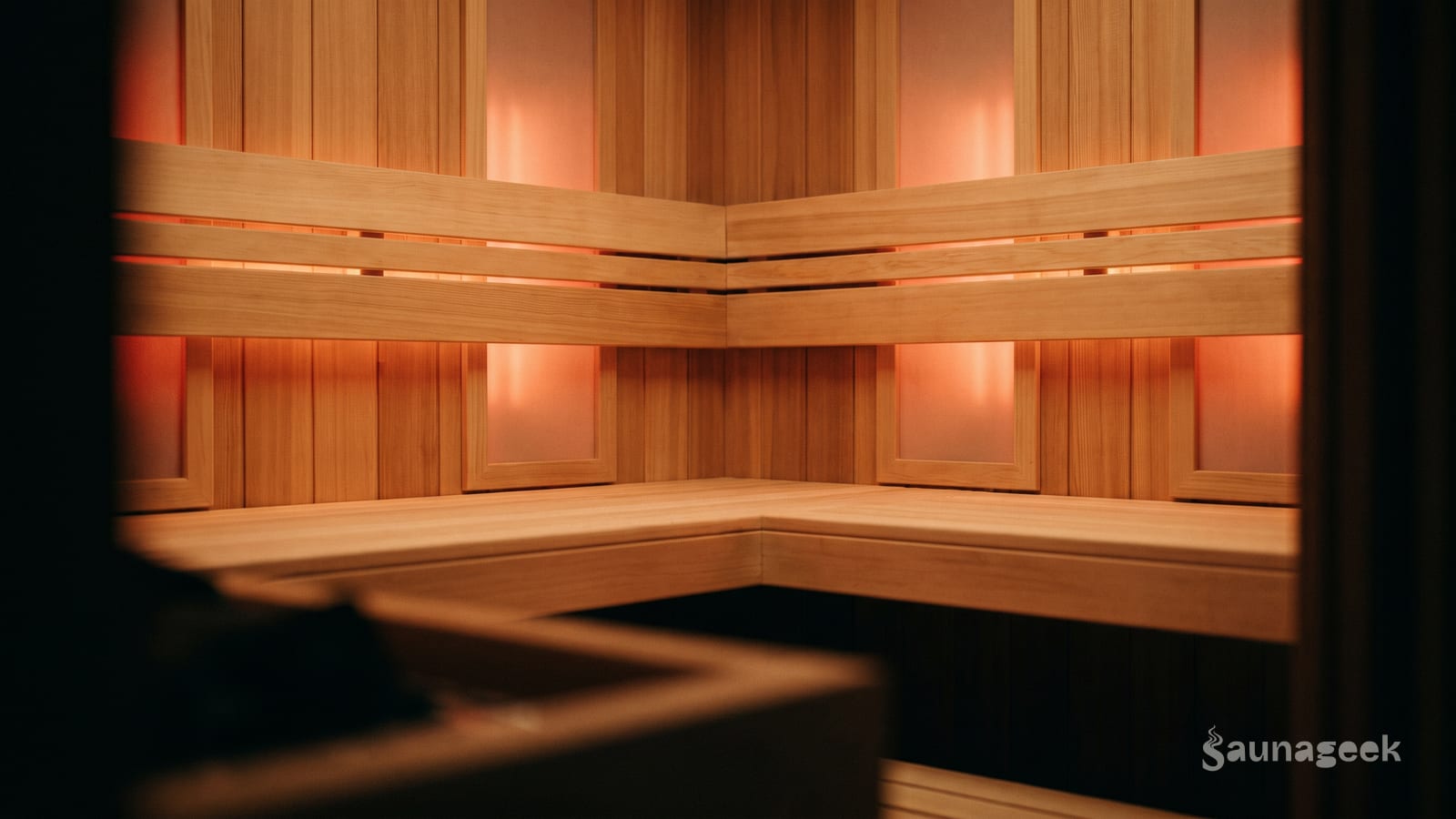
Infrared saunas sit in an odd space in the wellness world. They are not quite the ancient Finnish tradition, not quite the sleek biohack du jour. What they are is effective: radiant heat penetrates tissue differently than hot air, and for a lot of people setting up a home sauna practice, infrared is the realistic option.
This guide cuts through the marketing. It covers the technology honestly, gives you the buying criteria that matter, and names specific models without pretending any of them are perfect.
What Is an Infrared Sauna?
An infrared sauna heats your body using infrared light, which is the same spectrum of light you feel as warmth from the sun. Unlike a traditional sauna that heats the surrounding air to 160 to 200C (71-93F), an infrared sauna heats the air to a much lower 43 to 54C (110-130F). You feel warm because the infrared light heats your skin and tissue directly, not because the room around you is hot.
This difference matters. The lower air temperature is more tolerable for people who find traditional sauna heat oppressive. It also means you can install an infrared sauna in a bedroom corner or basement without turning your home into a steam room. Because infrared heats below the skin surface more efficiently than convection heating, some users report deeper muscle relaxation.
The tradeoff is atmosphere. Traditional sauna culture revolves around löyly, the steam created when you throw water on hot stones. That ritual is absent in infrared. If the social, steam-forward sauna experience is what you are after, infrared is not the right answer. If you want heat therapy for recovery, relaxation, and convenience, infrared delivers.
How Infrared Heat Works - Near, Mid, and Far Wavelengths
Infrared light covers a range of wavelengths, and they behave differently in tissue. Manufacturers make a lot of noise about full-spectrum coverage, so here is what the distinctions actually mean in practice.
Far infrared (FIR) is the most common spectrum in saunas. Wavelengths from 5.6 to 15 microns penetrate deepest, reaching subcutaneous tissue. FIR is what most people describe as the deep, penetrating warmth that makes muscles feel loose after a session. The evidence for FIR in pain management and muscle recovery is modestly positive.
Mid infrared (MIR) penetrates to intermediate depth, roughly 2 to 3 centimeters below the skin. Some manufacturers claim cardiovascular benefits from MIR wavelength exposure, but the evidence is thinner than for FIR.
Near infrared (NIR) operates at the shortest wavelengths and penetrates least deeply. NIR is closest to red light therapy and is used most actively in skincare and wound healing research. In a sauna context, NIR contributes to the surface warming effect.
Full-spectrum infrared saunas include all three wavelengths. Using only far infrared misses the surface and intermediate benefits of the other wavelengths. If a manufacturer offers full spectrum at a reasonable price premium over single-spectrum, the full spectrum is worth it for most users.
Ceramic heaters tend to emit a narrower spectrum and get hotter at the surface, which can create uneven heat zones. Carbon fiber panels distribute heat more evenly across a larger surface area and operate at lower surface temperatures while maintaining the same effective IR output. Carbon is the preferred heater type for quality infrared saunas.
What to Look for When Buying an Infrared Sauna
Size and capacity. Single-person infrared saunas are the most common home purchase. They typically accommodate one person seated. Two-person and larger units exist but require significantly more floor space and power. Measure your available space and compare it to the interior dimensions. Remember that you need clearance for the door opening and ventilation if the unit has a vent.
Full spectrum versus single-wavelength. As covered above, full spectrum is worth the premium. Most quality mid-range and above saunas are full spectrum by default. Be suspicious of entry-level units that claim full spectrum at a price that seems too low.
EMF levels. Electromagnetic fields from the electrical heating elements are a legitimate concern, though the controversy is more charged than the science requires. EMF is measured in milligauss (mG). Independent third-party testing (not the manufacturer’s own specs) is what you want here. Look for readings below 3 mG at seating position as a reasonable low-EMF benchmark. Some brands market zero EMF, which is effectively achieved by using non-electric heating elements like Sunlighten’s ceramic system, but verify the independent test data.
Do not dismiss EMF concerns as pseudoscience, but do not let them paralyze you. The epidemiological evidence for low-level EMF exposure from home appliances is not compelling for harm at typical household levels. Low-EMF models are worth the additional cost if you are sensitive to EMF or want to be cautious.
Heater placement. Full coverage heater placement matters. Cheaper units place heaters only in the walls. Quality units include under-bench and often foot-well heaters. Without under-bench coverage, your legs stay cooler than your torso, which makes the session feel unbalanced. This is a meaningful quality indicator: if under-bench heating is not mentioned in the specs, assume it is missing.
Wood type. Cedar is the most common and appropriate choice for sauna construction. It handles heat and humidity without warping, has natural antimicrobial properties, and produces a pleasant aroma. Basswood is the preferred choice for people with cedar allergies. Eucalyptus is a premium alternative gaining popularity for its chemical-free growing conditions and similar thermal properties. Spruce and pine are found in budget units and are less resistant to moisture long-term.
Power requirements. Single-person infrared saunas typically run on 120V and plug into a standard household outlet. Multi-person units and premium models often require 240V and a dedicated circuit. Check your electrical panel before buying a larger unit. Hardwired installation is cleaner but requires an electrician; plug-and-play setups are more portable.
Installation. Most infrared saunas are designed for relatively easy assembly, typically 30 to 90 minutes for two people. Check the doorway dimensions against the shipping width of the sauna before purchasing. Some two-person units cannot fit through standard doorways without disassembly.
Best Infrared Saunas by Budget
Budget pick (under $2,000): Entry-Level Single Person
The SaunaSpace Enclosure and comparable basic single-person carbon panel units are the honest answer in this range. At this price point you are getting a one-person unit, basic carbon panel heating (usually walls only), and lower-grade wood. The heat distribution will be uneven. The EMF readings may be higher than premium models.
If your budget is tight, this is where to start rather than stretching to something still cheap but worse. The Lierre infrared sauna blanket is a different category (a blanket you climb into rather than a cabin), and while some people use them, the heat distribution and EMF profile of blankets tends to be inferior to even budget cabin units.
Who it is for: buyers on a tight budget who want to establish a regular infrared practice without major upfront commitment.
Honest verdict: at this price, you are buying access to the technology, not quality. Set expectations accordingly.
Best value mid-range ($2,000 to $4,500)
The Sun Home Saunas Diamond Core is the strongest all-around value in this range. Full-spectrum carbon heating, under-bench coverage, low-EMF design with third-party verification, and quality cedar construction. The interior is comfortable for single-person use and the app control is functional without being flashy. Maintenance is straightforward. This is the unit most buyers in this category should end up with.
The HigherDOSE Infrared Sauna Blanket sits awkwardly between categories. As a blanket, it is more portable and affordable than cabin units, but the heat distribution and EMF profile are genuinely inferior to even budget cabin saunas. If you are space-constrained and want to try infrared therapy at low cost, the blanket works as a stepping stone. Do not expect cabin quality from it.
Premium pick ($4,500 to $7,000)
The Sunlighten Solo Carbon Plus earns its price in this range. Full-spectrum carbon heating with independently verified low EMF readings. The construction quality is genuinely better than mid-range alternatives: tighter door seals, more even heat distribution, better wood selection. Sunlighten has third-party testing that backs up the full-spectrum claims.
The Health Mate TFinn is a traditional Finnish-designed unit that runs on 240V and is a genuine hybrid for buyers who want some of the infrared benefits with a more authentic sauna feel.
Best high-end and outdoor ($7,000+)
The Sun Home Neverslate Outdoor is built for exterior installation in variable weather. Cedar construction, weather-sealed electrical components, full-spectrum heating that holds up in cooler outdoor ambient temperatures. If you want an outdoor infrared setup in a climate with real seasons, this is the most honest option. The weather resistance is genuine, not marketed.
The Dynamic Sierra 360 in its outdoor configuration is a comparable alternative with a slightly different design philosophy. Both are quality builds. The choice between them comes down to aesthetics and availability.
For buyers at this price point who are serious about outdoor sauna culture and not just infrared convenience, a case can be made for going all the way to a traditional Finnish sauna cabin instead. Infrared outdoor installations do not produce the löyly steam experience and lack the authentic social sauna ritual. At $7,000+, you are within striking distance of a traditional barrel sauna kit that delivers the real thing.
Infrared Sauna vs. Traditional Sauna - Which Should You Choose?
This is the question every buyer needs to answer before looking at models.
Choose infrared if: you want heat therapy for muscle recovery or relaxation, you are installing in a space where traditional sauna heat would be uncomfortable (bedroom, apartment, basement), you want lower operating temperatures that are easier to tolerate for 20 to 30 minutes, you are interested in the near-infrared skincare angle, or you want easier installation with no ventilation headaches.
Choose traditional if: you want the authentic Finnish sauna experience with löyly, steam, and the full cultural ritual, you have a proper space (outdoor structure, dedicated room) that can handle high humidity and temperature, you enjoy the social dimension of sauna, or you prioritize genuine high-heat exposure over convenient low-heat recovery.
The deciding factor for most people comes down to space and purpose. If you want a daily recovery and relaxation practice that fits into a modern home without major construction, infrared wins on practicality. If you want the Finnish sauna tradition, there is no substitute for the real thing.
How to Use an Infrared Sauna Safely
Session length of 15 to 30 minutes is well-supported by the evidence. Start at the lower end, especially if you are new to heat therapy or have cardiovascular conditions. Your body adapts over sessions, but the first several times are about learning your tolerance, not pushing limits.
Frequency of 3 to 4 sessions per week is a good maintenance range for recovery and relaxation benefits. Daily use is fine if you tolerate it well, but benefits plateau beyond a certain frequency. Two to three quality sessions per week is more effective than five half-hearted ones.
Hydration matters more in infrared than most people expect. You are not just sweating from surface evaporation; the deep tissue heating draws fluid out of your body. Drink water before and after, and consider electrolytes if you are a heavy sweater or are sessioning more than three times per week.
Exit signals that should make you stop: lightheadedness, nausea, heart palpitations, feeling faint. These are not endurance tests. Get out, cool down, hydrate. Pushing through is how people end up with heat exhaustion, which is unpleasant and unnecessary.
Contrast therapy pairs naturally with infrared. A cold plunge or cold shower after your session amplifies the dopamine response and leaves most people feeling clear-headed. The hot-cold cycle is where the practice gets interesting.
Pregnancy is a contraindication for infrared saunas. The elevated core body temperature is a documented risk factor. Pregnant people should not use infrared saunas.
Infrared Sauna FAQ
Do infrared saunas actually work? Yes for heat therapy benefits: muscle relaxation, temporary pain relief, improved circulation, and stress reduction are all supported by evidence. Be skeptical of specific medical claims, especially around detox, immune function, and weight loss.
Are low EMF infrared saunas worth it?
If you have diagnosed electromagnetic sensitivity, low-EMF units are worth the additional cost. For most people, the evidence for harm from typical household EMF levels is weak. That said, low-EMF saunas tend to be better-built units overall, so you are often getting a quality signal along with the EMF rating. Look for independent third-party test results, not just brand claims.
Can I use an infrared sauna if I am pregnant?
No. Infrared saunas are contraindicated during pregnancy due to the risk of elevated core body temperature. This applies to any heat therapy that significantly raises core temperature, including traditional saunas and hot tubs.
How much does an infrared sauna cost to run?
Running costs depend on the unit size, session frequency, and local electricity rates. A typical single-person infrared sauna costs roughly $15 to $40 per month for 3 to 4 sessions per week. 240V multi-person units run higher. Compared to traditional saunas, infrared is more energy-efficient because it heats only the user, not a large air volume.
What is the lifespan of an infrared sauna? With proper care, 10 to 15 years is a reasonable lifespan for a quality infrared sauna. Heater panels (carbon fiber or ceramic) typically last 5 to 8 years with heavy use before requiring replacement.
Do infrared saunas help with weight loss?
Infrared saunas cause temporary water weight loss through heavy sweating. This is not fat loss. Any weight loss you see immediately after a session is water weight that returns with rehydration. If you are using an infrared sauna for weight management, the more honest framing is that regular heat therapy may support an active lifestyle and stress management, which indirectly support weight goals.
Indoor versus outdoor infrared sauna: which is better?
Indoor infrared saunas are more convenient and require less weatherproofing. Outdoor infrared saunas deliver a more authentic wellness space feel and can be used year-round without affecting your home’s interior climate. The infrared performance itself does not change meaningfully outdoors versus indoors, assuming ambient temperature is not extreme. Choose based on your available space, not the technology.
Final Thoughts
Infrared saunas are effective heat therapy tools that fit into modern homes in ways traditional saunas cannot. The technology is not pseudoscience, but the marketing often is. Full-spectrum carbon heating with independent EMF verification is worth paying for. Entry-level units deliver the technology but not the experience.
If you are building a home wellness practice that includes contrast therapy, infrared is a natural complement to a cold plunge. Do not overspend on features you will not use, but do not cheap out on heating element quality, because that determines whether the sessions feel therapeutic or merely warm.
The best infrared sauna is the one you will actually use consistently.